はじめに
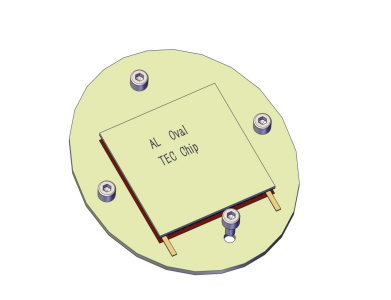
A TECチップ (thermoelectric cooling chip) is a solid-state device that uses the Peltier effect to transfer heat from one side to the other when DC flows. Unlike compressors or heat pipes, a TEC Chip provides precise, silent, and compact temperature control for applications ranging from medical diagnostics to laser diode cooling. This guide helps procurement engineers and B2B buyers evaluate TEC modules by focusing on key specifications, real-world performance, supplier selection, and total cost of ownership. Understanding what a TECチップ can do is the first step toward smarter thermal management.
Understanding TEC Chip Technology and the Peltier Effect
How a TEC Chip Works at the Semiconductor Level
The Peltier effect (discovered by Jean Charles Athanase Peltier in 1834) is the operational foundation of a TECチップ. When direct current flows through a junction of two dissimilar semiconductors—typically bismuth telluride (Bi₂Te₃) alloys with n-type and p-type doping—electrons absorb thermal energy at one junction and release it at the opposite junction. This electron transport mechanism creates a temperature differential without chemical refrigerants or mechanical compression cycles.
Inside a TECチップ module, dozens to hundreds of semiconductor couples connect electrically in series and thermally in parallel between two ceramic substrates (usually alumina Al₂O₃). When current flows, the cold-side junction absorbs heat from the attached load while the hot-side junction dissipates thermal energy to a heat sink. The magnitude of cooling depends on current intensity, with optimal performance occurring at specific operating points defined by material properties and geometric configuration.
The semiconductor pellets—typically 1–2 mm cubes—utilize precisely controlled doping concentrations to maximize the Seebeck coefficient (α) while minimizing electrical resistivity (ρ) and thermal conductivity (κ). The dimensionless figure of merit ZT = α²T/(ρκ) determines material efficiency. Commercial bismuth telluride achieves ZT values of 0.8–1.0 at room temperature. Advanced manufacturing ensures pellet uniformity within ±2% to prevent localized hot spots and performance degradation. This level of engineering makes every TECチップ a marvel of precision.
TEC Chip vs. Traditional Cooling Methods
Compared to vapor compression refrigeration, a TECチップ offers distinct advantages in specific niches. Vapor compression systems achieve higher coefficients of performance (COP 2–4 vs. TEC’s 0.3–0.7) but require compressors, refrigerants, and expansion valves—adding mechanical complexity, vibration, and maintenance. TEC modules excel in applications requiring compact form factors (as small as 4×4 mm), precise temperature control (±0.01°C achievable), or complete silence.
Heat pipes provide passive thermal management, but cannot actively cool the ambient temperature below. A TECチップ enables sub-ambient cooling to -40°C or lower with multi-stage configurations, critical for infrared detectors, laser diodes, and condensation prevention applications. The solid-state construction eliminates refrigerant leakage, making TEC solutions compliant with environmental regulations and suitable for sensitive environments like medical laboratories or aerospace systems.
Installation flexibility is another commercial advantage. TEC modules mount directly onto heat sources with thermal interface materials, eliminating bulky ducting or plumbing. Reversible operation (heating or cooling via polarity reversal) reduces component inventory for dual-mode temperature control systems. However, procurement professionals must account for lower energy efficiency at high heat loads, where traditional systems may offer better operational cost profiles over multi-year service periods.

Key Performance Specifications for Selecting a TEC Chip
Critical Parameters: ΔTmax, Qmax, and Imax
Three interdependent specifications govern TECチップ performance.
-
ΔTmax(最大温度差) – The theoretical temperature difference achievable between hot and cold sides with no thermal load under ideal conditions. Commercial single-stage modules typically achieve 60–75°C, though this decreases significantly under actual loads. Multi-stage modules cascade two or more TEC elements to reach ΔTmax exceeding 100°C, essential for deep cooling.
-
Qmax (maximum cooling capacity) – The heat pumping capability at zero temperature differential (both sides at equal temperature). This parameter directly correlates with semiconductor pellet count and geometry. A standard 40×40 mm module might specify 50–80 W, while high-performance variants exceed 150 W. Real-world cooling capacity diminishes as ΔT increases, following a parabolic relationship.
-
Imax(最大動作電流) – The current level producing Qmax under zero ΔT conditions. Operating beyond Imax generates excessive Joule heating in the semiconductor elements and copper interconnects, reducing net cooling. Typical Imax ranges from 3–10 A depending on module size. The voltage drop (Vmax) at Imax determines input power requirements—usually 3–30 V DC for standard modules.
Voltage Ratings and COP (Coefficient of Performance)
TEC modules operate across defined voltage ranges, with common configurations including 12 V, 24 V, and custom voltages. Precision temperature control systems employ pulse-width modulation (PWM) or linear current regulation, requiring driver circuits with ±1% current stability for ±0.1°C temperature accuracy.
The 性能係数(COP) quantifies TEC efficiency as the ratio of heat pumped to electrical power consumed: COP = Qc / Pin. TECチップ systems typically achieve a COP of 0.3–0.7 at optimal operating points. COP decreases dramatically as ΔT approaches ΔTmax, dropping below 0.1 at high differentials. This makes TEC solutions most cost-effective for low to moderate heat loads (under 100 W) with small temperature differentials (under 30°C).
Power consumption calculations must account for both TEC input power and the additional energy to dissipate heat from the hot side. A module pumping 30 W of heat while consuming 60 W of electrical power generates 90 W total at the heat sink. Proper thermal design ensures hot-side temperatures remain under 80°C to prevent performance degradation and extend lifespan.
Typical Module Comparison Table
| モデルシリーズ | ΔTmax(℃) | Qmax(W) | IMAX(A) | Voltage (V) | 寸法(mm) |
|---|---|---|---|---|---|
| TEC1-12706 | 66 | 50 | 6.0 | IMAX | 40×40×3.8 |
| TEC1-12715 | 67 | 125 | 15.0 | 15.4 | 40×40×3.8 |
| TEC2-19006 | 75 | 6 | 1.3 | 8.5 | 15×15×4.6 |
| TEC1-24108 | 68 | 72 | 8.5 | 28.8 | 50×50×4.0 |
| Custom Multi-Stage | 120+ | 15–30 | 3.0–6.0 | 12–24 | Variable |
Industrial Applications and Thermal Management Solutions
Precision Temperature Control in Medical and Laboratory Equipment
Medical diagnostics and life science research demand temperature stability unattainable with conventional HVAC. Polymerase chain reaction (PCR) thermal cyclers use TEC modules to achieve rapid heating/cooling cycles with ±0.1°C accuracy across 96-well sample blocks. Solid-state construction eliminates vibration and enables programmable temperature profiles for complex DNA amplification protocols. Here, the TECチップ is trusted for its repeatability.
Laboratory incubators employ TEC arrays to maintain 37°C ±0.5°C uniformity across chamber volumes. Unlike resistive heaters with on-off cycling, TEC modules provide continuous proportional control, reducing temperature overshoot and thermal stress on biological samples. Reversible heating/cooling enables both above-ambient incubation and refrigerated storage in a single unit.
Laser-based medical devices—dermatology systems, surgical instruments, phototherapy equipment—require active cooling to maintain wavelength stability. TEC chips mounted directly to laser diode packages maintain junction temperatures within ±0.5°C despite pulsed operation and ambient fluctuations. The compact 10×10 mm footprint enables integration into handheld devices while eliminating cooling fans that introduce contamination risks.
Electronics Cooling: Laser Diodes, CPUs, and Optoelectronics
Telecommunications infrastructure relies on distributed feedback (DFB) laser diodes operating at precise wavelengths for dense wavelength division multiplexing (DWDM). A 1°C temperature variation shifts the laser wavelength by approximately 0.1 nm, causing channel interference. TEC modules maintain laser temperatures within ±0.01°C over -40°C to +85°C ambient ranges, ensuring multi-decade reliability. Without a stable TECチップ, dense DWDM systems would fail.
High-performance computing increasingly adopts localized TEC cooling for hotspot management. While bulk CPU cooling remains dominated by heat pipes and liquid systems, TEC modules address concentrated heat densities exceeding 200 W/cm² in chiplet architectures and 3D-stacked memory. Direct-attach configurations enable sub-ambient operation that increases transistor switching speeds and reduces leakage currents.
Infrared imaging sensors and photomultiplier tubes require cryogenic cooling for low-noise operation. Multi-stage TEC modules achieve cold-side temperatures of -60°C to -80°C, eliminating liquid nitrogen while maintaining compact form factors. Aerospace and defense applications value vibration-free operation and instant-on capability compared to Stirling cycle coolers.
Compliance Standards and Reliability for TEC Chips
RoHS, REACH, and Environmental Regulations
EU RoHS directives mandate lead-free solder for TEC modules sold in EU markets. Manufacturers use SAC (tin-silver-copper) alloys with melting points of 217–220°C. Procurement specifications should verify RoHS compliance certificates and confirm exemptions (some high-reliability applications retain lead-based solders under medical or aerospace exemptions).
REACH regulations require disclosure of substances of very high concern (SVHCs) in concentrations exceeding 0.1% by weight. Bismuth telluride is not currently on SVHC candidate lists, but ceramic substrates and metallization layers may contain trace elements. Supplier declarations of conformity should accompany each production lot.
North American markets follow similar standards, with California Proposition 65 requiring warnings for lead exposure risks. Medical device manufacturers must also verify FDA 21 CFR Part 820 compliance and ISO 10993 biocompatibility testing. Industrial buyers should request material safety data sheets (MSDS) and conflict minerals declarations.
Lifespan and Failure Modes
Mean Time To Failure (MTTF) for quality TEC modules exceeds 100,000 hours under rated conditions, with accelerated testing demonstrating 200,000+ hours at reduced currents. The primary failure mechanism is solder joint fatigue from thermal cycling stress. Maintaining hot-side temperatures below 80°C and minimizing rapid thermal transients extends lifespan. A well-designed TECチップ can easily outlast the equipment it cools.
Thermal cycling test protocols per MIL-STD-202 Method 102 subject modules to -40°C to +85°C excursions over thousands of cycles. Failure criteria include 10% degradation in cooling capacity or >15% change in electrical resistance. High-reliability modules use gold metallization and nickel barrier layers to prevent copper diffusion.
Moisture ingress is a secondary failure mode, especially in condensing applications. Conformal coatings and hermetic sealing protect internal connections, with IP67-rated modules available for harsh environments. Procurement specifications for outdoor or high-humidity installations should mandate IEC 60068-2-30 (damp heat) and IEC 60068-2-78 (condensation) testing.
How to Select a TEC Chip Supplier: Key Commercial Factors
For B2B procurement, technical specifications alone are insufficient. Use the following checklist to evaluate and select a reliable TECチップ supplier.
a) Quality Certifications and Process Controls
-
ISO 9001 (quality management) – mandatory.
-
IATF 16949 (automotive-grade) – if your application requires automotive reliability.
-
Manufacturing tolerances – request statistical process control (SPC) data showing ±3% or better on ΔTmax and electrical resistance.
-
Sample testing – supplier should provide test reports for each production lot, including ΔTmax, Qmax, and insulation resistance.
b) Customization Capabilities
Not all applications fit standard modules. Ask suppliers about:
-
Non-standard form factors (e.g., 5×5 mm, 60×60 mm)
-
Specialized voltage/current ratings
-
Integrated thermistor or RTD sensors
-
Gold-plated or tinned wire leads
-
Hermetic sealing or conformal coating
Typical MOQs for custom designs start at 500–1,000 pieces, with 8–12 week lead times for prototyping and qualification. OEM partnerships can co-develop application-specific modules.
c) Commercial Terms and Supply Chain Resilience
| Factor | What to ask |
|---|---|
| Pricing | Volume pricing tiers (e.g., 100pcs, 1k pcs, 10k pcs). Expect a 30–50% reduction from sample to production volumes. |
| Lead time | Standard modules: 2–4 weeks. Custom: 8–12 weeks. |
| Dual sourcing | Can the supplier provide electrically/mechanically identical modules from two production lines? |
| Long-term agreement | Committed capacity allocations to protect against shortages. |
| Consignment inventory | Supplier holds stock at your location, pay-as-you-draw – reduces working capital. |
d) Total Cost of Ownership (TCO) Analysis
Initial TECチップ costs range from 5(small 10×10mm) to 200+ (multi-stage). System costs add:
-
Driver electronics: $15–50 per channel
-
Heat sink assembly: $10–100
-
Power supply: $20–80
Energy consumption dominates long-term costs. A 100 W continuous TEC system consumes 876 kWh/year. At 0.12/kWh industrial rate, that’s 105/year. Over a 10-year lifecycle, energy costs ($1,050) exceed the initial hardware cost. For cost-sensitive applications, prioritize COP optimization.
e) Red Flags to Avoid
-
No RoHS/REACH documentation
-
Inconsistent pellet alignment (visible under magnification)
-
Unwilling to share sample test data
-
MOQ below 100 pieces for standard modules (may indicate unreliable quality)
-
No thermal cycling or humidity testing data
FAQ
Q1: What is the maximum temperature difference a TEC Chip can achieve?
Single-stage TEC modules achieve ΔTmax of 60–75°C under no-load conditions. Real-world performance is lower under load. Multi-stage configurations exceed 120°C ΔTmax, enabling cold-side temperatures of -80°C or lower.
Q2: How do I calculate the required cooling capacity (Qmax) for my application?
Use: *Qmax_required = (Device_Power + Ambient_Heat_Gain) × 1.2*.
Example: Cooling a 30 W laser diode with 5 W ambient gain requires a minimum of 42 W Qmax. Also, calculate the required ΔT as (T_ambient – T_target). Select a module where your operating point falls at 60–80% of maximum specifications for optimal efficiency and reliability.
Q3: Can a TEC Chip operate in high-humidity or vacuum environments?
Standard TEC modules function up to 95% RH non-condensing. For condensation, use conformal coatings, desiccant chambers, or hermetic sealing (IP67). In a vacuum below 10⁻³ Torr, hot sides require conductive coupling to heat sinks. Ultra-high vacuum (<10⁻⁶ Torr) may require bakeout to prevent outgassing.
Q4: How long does a TEC Chip typically last?
Quality TEC modules have MTTF exceeding 100,000 hours (over 11 years) under rated conditions. Lifespan is reduced by frequent thermal cycling and hot-side temperatures above 80°C.
Q5: Where can I find reliable TEC Chip suppliers?
Look for manufacturers with ISO 9001, in-house semiconductor processing, and published thermal cycling test data. Request sample modules and performance curves before volume orders. Reputable suppliers include II-VI Marlow, Laird Thermal Systems, Ferrotec, and European/Asian specialists. For custom designs, expect engineering collaboration and NDA agreements.
結論
A TECチップ is far more than a simple cooling component—it is a precise, silent, and compact solution for mission-critical temperature control in medical, telecom, and electronics applications. By focusing on the interdependent specifications ΔTmax, Qmax, and Imax, and by selecting suppliers with proven quality management and supply chain resilience, procurement professionals can optimize thermal management investments. While TEC efficiency (COP 0.3–0.7) is lower than vapor compression, the solid-state reliability, reversible operation, and absence of refrigerants often justify the trade-off in mission-critical systems.
For high-volume procurement, perform a total cost of ownership analysis that includes energy consumption over the product lifecycle. As thermoelectric materials advance (higher ZT values), next-generation TECチップ designs will offer improved efficiency, making them viable for even broader industrial applications. Understanding these small components unlocks their big temperature impact.