In an era where electronic devices are becoming smaller, more powerful, and increasingly sensitive to temperature fluctuations, thermal management has emerged as a critical engineering challenge. From high-performance laser diodes and medical diagnostic equipment to automotive sensors and consumer electronics, the ability to maintain precise temperature control can mean the difference between reliable operation and catastrophic failure.
Enter the TEC cooling module—a solid-state heat pump that has quietly revolutionized how engineers approach thermal management. Unlike traditional compressor-based systems, thermoelectric coolers (TECs) offer unparalleled precision, compact form factors, and silent operation. But how do they work, and when are they the right choice for your application?
In this comprehensive guide, we will explore the science behind TEC cooling module technology, compare it with alternative cooling methods, and provide actionable guidance on selecting, integrating, and maintaining these versatile thermal management solutions.
What Is a TEC Cooling Module?
A TEC cooling module, also known as a thermoelectric cooler (TEC) or Peltier module, is a solid-state device that transfers heat from one side of the module to the other when an electrical current is applied. The effect was discovered in 1834 by French physicist Jean Charles Athanase Peltier, who observed that passing current through a junction of two dissimilar metals caused heating or cooling at the junction.
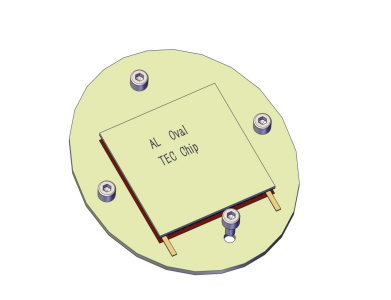
Modern TEC cooling modules consist of dozens or hundreds of pairs of p-type and n-type semiconductor pellets (typically bismuth telluride) arranged electrically in series and thermally in parallel. These pellets are sandwiched between two ceramic substrates—one cold side and one hot side. When direct current flows through the module, heat is absorbed at the cold side and released at the hot side, creating a temperature differential that can exceed 70°C (126°F) across the module.
How a TEC Cooling Module Works
The operation of a TEC cooling module relies on three key physical phenomena:
-
Peltier Effect: When current flows through the junction of two dissimilar conductors, heat is either absorbed or released at the junction. In a TEC module, this effect is amplified by using semiconductor materials with high thermoelectric coefficients.
-
Seebeck Effect: The inverse of the Peltier effect—a temperature differential across a thermoelectric material generates an electrical voltage. This principle is used in thermoelectric generators (TEGs), a related but distinct technology.
-
Joule Heating: As current passes through the module, resistive heating occurs. This parasitic heat must be managed by the system’s heat rejection mechanism.
In a typical application, the cold side of the TEC cooling module is attached to the object requiring cooling (such as a laser diode or a reaction vessel), while the hot side is attached to a heat sink and fan assembly that dissipates the combined heat load (the heat pumped from the cold side plus the Joule heat generated by the module).
Key Advantages of TEC Cooling Modules
Why would an engineer choose a TEC cooling module over a conventional compressor-based system or passive cooling? The answer lies in a unique combination of advantages.
1. Precision Temperature Control
Perhaps the most compelling advantage is the ability to achieve exceptional temperature stability. With a closed-loop control system using a thermistor or resistance temperature detector (RTD), a TEC cooling module can maintain temperature accuracy of ±0.01°C or better. This level of precision is essential for applications such as:
-
Laser diode stabilization (wavelength shifts with temperature)
-
Polymerase chain reaction (PCR) thermal cycling
-
Infrared sensors and detectors
-
Analytical instrumentation (spectrophotometers, chromatographs)
2. Compact Form Factor
TEC modules are remarkably small relative to their cooling capacity. A typical TEC cooling module measures only 30–50 mm per side and 3–5 mm thick, yet can pump tens of watts of heat. This compactness enables thermal management in spaces where a compressor system would never fit—from portable medical devices to fiber optic transceivers.
3. Silent, Vibration-Free Operation
Because there are no moving parts within the TEC cooling module itself (the only moving parts are external fans, if used), operation is completely silent and free from mechanical vibrations. This is critical for:
-
Optical systems (vibration degrades alignment)
-
Laboratory instruments (noise-sensitive measurements)
-
Medical devices (patient comfort)
-
High-end audio and imaging equipment
4. No Refrigerants or Compressors
Traditional cooling systems rely on chemical refrigerants that can be environmentally harmful (high global warming potential) and are subject to increasingly stringent regulations. TEC cooling modules use no refrigerants, contain no moving parts, and operate on DC power, making them inherently more environmentally friendly and easier to integrate into battery-powered or portable systems.
5. Reliable and Long-Lived
With no moving parts to wear out, a properly designed TEC cooling module can operate for tens of thousands of hours with minimal degradation. Mean time between failures (MTBF) for quality TEC modules often exceeds 100,000 hours under rated conditions.
Common Applications of TEC Cooling Modules
The versatility of TEC cooling module technology has led to adoption across a remarkably broad range of industries.
Medical and Biotechnology
-
PCR thermal cyclers: Rapid heating and cooling for DNA amplification.
-
Medical refrigeration: Portable vaccine coolers, blood analyzers.
-
Laser therapy devices: Maintaining laser diode temperature for consistent output.
-
Patient temperature management: Precision warming/cooling pads.
Telecommunications and Photonics
-
Fiber optic transceivers: Cooling laser diodes to maintain wavelength stability.
-
Laser projectors: Thermal management for RGB laser modules.
-
Infrared detectors: Cooling sensors to reduce dark current and improve signal-to-noise ratio.
Automotive
-
Battery thermal management: Maintaining optimal temperature for EV batteries.
-
Seat climate control: Heating and cooling automotive seats.
-
ADAS sensors: Stabilizing temperature for LiDAR and camera modules.
-
Infrared night vision: Cooling sensor arrays.
Consumer Electronics
-
Wine coolers and beverage refrigerators: Compact, silent cooling.
-
Portable coolers: Car-powered or battery-operated camping refrigerators.
-
High-performance computing: CPU and GPU cooling for overclocking.
-
Digital projectors: LED and DMD chip cooling.
Industrial and Scientific
-
Analytical instruments: Spectrophotometers, chromatographs, gas analyzers.
-
Semiconductor manufacturing: Wafer chuck temperature control.
-
Laboratory equipment: Reaction vessels, sample storage.
-
Defense and aerospace: Cooling for sensors and avionics.
TEC Cooling Module vs. Compressor-Based Cooling
To help engineers make informed decisions, the following comparison highlights the key differences between TEC cooling module systems and traditional compressor-based refrigeration.
| Feature | TEC Cooling Module | Compressor-Based System |
|---|---|---|
| Size | Compact (mm scale) | Large (requires space for compressor, coils) |
| Weight | Light | Heavy |
| Temperature Precision | Exceptional (±0.01°C possible) | Moderate (±1–2°C typical) |
| Cooling Capacity | Typically 1–200 W per module (scalable by stacking) | 100 W to several kW |
| Définit le rapport entre la chaleur pompée et l'énergie électrique consommée, exprimé par COP = Qc/P, où Qc est la puissance de refroidissement et P la puissance d'entrée. Les modules TEC commerciaux atteignent généralement des valeurs de COP comprises entre 0,3 et 0,8 dans des conditions optimales. Le COP diminue significativement lorsque ΔT augmente, rendant la technologie TEC particulièrement efficace pour les applications nécessitant des différences de température modérées (ΔT < 40°C). | 0.4–0.8 (typical for cooling) | 2–4 (refrigeration cycle) |
| Noise/Vibration | Silent, vibration-free | Moderate to high noise and vibration |
| Refrigerants | None | HFCs, HFOs, or natural refrigerants |
| Power Input | DC (typically 12–48 V) | AC mains |
| Lifespan | 50,000–200,000 hours | 10–15 years (compressor wear) |
| Cost per Cooling Watt | Higher initial cost | Lower initial cost at higher capacities |
| Best For | Precision, portability, and low to moderate heat loads | High heat loads, energy efficiency, fixed installations |
Analysis: TEC cooling modules excel in applications requiring precision, compactness, and silent operation. Compressor systems remain superior for high-capacity cooling where energy efficiency is paramount, and space is not constrained.
Selecting the Right TEC Cooling Module
Choosing the correct TEC cooling module for your application involves balancing several interdependent factors.
Key Selection Criteria
-
Heat Load (Qc): The amount of heat that must be removed from the target object. This includes active heat generation (e.g., from a laser diode) and passive heat gain (from the ambient environment).
-
Required Temperature Differential (ΔT): The difference between the cold side temperature and the hot side temperature. Higher ΔT requires more current and reduces efficiency.
-
Hot Side Rejection Temperature (Th): Determined by the heat sink and ambient conditions. For maximum performance, the hot side should be kept as cool as possible.
-
Current and Voltage: TEC modules are rated for maximum current (Imax) and voltage (Vmax). Operating at or near these values provides maximum heat pumping capacity but also maximum power consumption.
-
Physical Size: The module must fit within the mechanical envelope and match the thermal interface area.
Performance Optimization
The performance of a TEC cooling module is characterized by two key curves:
-
ΔT vs. Heat Load: As heat load increases, the achievable ΔT decreases.
-
Coefficient of Performance (COP) vs. Current: COP peaks at approximately 50–70% of Imax; operating at Imax maximizes cooling capacity but reduces efficiency.
For many applications, running a TEC cooling module at 70–80% of Imax provides an optimal balance between cooling capacity and power consumption.
Multi-Stage vs. Single-Stage Modules
-
Single-stage modules: Achieve ΔT of up to 70–75°C in ideal conditions. Suitable for most applications where cold side temperatures above -20°C are acceptable.
-
Multi-stage modules: Two, three, or more stages stacked to achieve ΔT exceeding 100°C, enabling cold side temperatures as low as -100°C. Used for infrared detectors, cold traps, and specialized scientific instruments.
Integration and Thermal Management Considerations
A TEC cooling module is only as effective as the system in which it is integrated. Proper thermal design is essential.
Heat Sink and Fan Selection
The hot side of the TEC module must reject the sum of the pumped heat and the input power. For example, if a TEC pumps 50 W of heat and consumes 50 W of electrical power, the hot side must reject 100 W. An undersized heat sink will cause the hot side temperature to rise, reducing the module’s ΔT capability and potentially leading to thermal runaway.
Best practices:
-
Use forced convection (fan-cooled) heat sinks for heat loads above 20 W.
-
Ensure thermal interface materials (TIMs) such as thermal grease or graphite pads are applied correctly to minimize contact resistance.
-
Consider liquid cooling for high-power or space-constrained applications.
Electrical Drive and Control
Unlike resistive heaters or simple motors, a TEC cooling module requires a carefully designed drive circuit:
-
H-bridge or bidirectional DC-DC converter: Allows both heating and cooling by reversing current polarity.
-
Proportional-Integral-Derivative (PID) control: Enables precise temperature regulation.
-
Current limiting: Protects the module from excessive current that could cause mechanical stress from thermal expansion mismatch.
Reliability and Failure Modes
Common failure modes include:
-
Thermal fatigue: Repeated thermal cycling can cause solder joint failure between pellets and metallized ceramic substrates.
-
Moisture ingress: Condensation on the cold side can lead to corrosion or electrical shorting. Hermetic sealing or conformal coating may be required for humid environments.
-
Overcurrent: Exceeding Imax can cause overheating and permanent damage.
Emerging Trends in TEC Cooling Technology
The field of thermoelectric cooling continues to evolve, with several trends shaping the next generation of TEC cooling modules.
Advanced Thermoelectric Materials
Traditional bismuth telluride remains the standard, but research into skutterudites, half-Heusler alloys, and nanostructured materials promises higher figures of merit (ZT) and improved efficiency. Higher ZT translates directly to better COP and greater cooling capacity.
Integration with Microelectronics
Thin-film TEC modules deposited directly onto silicon or other substrates are enabling on-chip thermal management for high-power electronics, photonics, and quantum computing applications where hotspots must be controlled at the die level.
Energy Harvesting and Thermal Management
In some systems, TEC cooling modules can operate in reverse as thermoelectric generators (TEGs), converting waste heat into electrical power. This dual-mode capability is being explored for self-powered sensors and Internet of Things (IoT) devices.
FAQ
1. How efficient is a TEC cooling module compared to a compressor-based system?
A typical TEC cooling module has a coefficient of performance (COP) of 0.4 to 0.8 for cooling applications, meaning it moves 0.4 to 0.8 watts of heat for every watt of electrical power consumed. In comparison, a compressor-based refrigeration system typically achieves a COP of 2 to 4. TEC modules are less energy-efficient but offer advantages in precision, size, and silence that often outweigh efficiency concerns in many applications.
2. Can a TEC cooling module both heat and cool?
Yes. By reversing the polarity of the DC, the hot and cold sides swap functions. This bidirectional capability is a significant advantage over compressor systems, which typically provide cooling only. A single TEC cooling module can serve as both a heater and a cooler, simplifying system design for applications requiring temperature cycling or stabilization above and below ambient.
3. How do I prevent condensation on the cold side of a TEC module?
When the cold side temperature drops below the dew point of the ambient air, condensation forms. Prevention strategies include:
-
Sealing the cold side assembly in a dry, inert atmosphere (nitrogen purging).
-
Using conformal coatings or hermetic enclosures.
-
Operating with a cold side temperature above the dew point.
-
Incorporating desiccants or active moisture removal.
4. What is the lifespan of a typical TEC cooling module?
Under proper operating conditions—within rated current, with adequate heat rejection, and without excessive thermal cycling—a quality TEC cooling module can last 50,000 to 200,000 hours. Failures typically result from thermal fatigue, electrical overstress, or environmental factors such as moisture ingress rather than intrinsic wear.
5. How do I select a TEC cooling module for a battery-powered application?
For battery-powered operation, prioritize modules with a high coefficient of performance (COP) at the operating point. Running the module at 50–70% of its maximum current often yields the best balance of cooling capacity and power consumption. Additionally, consider integrating the TEC cooling module with a PID controller that minimizes on-time by maintaining the setpoint with minimal cycling.
Conclusion: Precision Thermal Management at Your Fingertips
The TEC cooling module represents a mature yet continuously evolving technology that fills a critical niche in the thermal management landscape. When your application demands precise temperature control, silent operation, compact form factors, and the ability to both heat and cool with a single device, thermoelectric cooling is often the optimal solution.
From stabilizing laser diodes in fiber optic networks to enabling the thermal cycling that powers modern molecular diagnostics, TEC cooling modules quietly enable technologies that define our world. By understanding the principles of operation, the trade-offs compared to compressor systems, and the best practices for integration, you can confidently select and deploy these versatile thermal management solutions.
If you’re looking to add precise thermal management to your project, reach out to our thermoelectric team. We provide a variety of TEC cooling modules, custom setups, and engineering advice to help you hit the right performance targets. Just ask for a quote or set up a technical consultation to get things rolling.