Abstract
This article explains the connection between TEC chips and Peltier devices, detailing their technical similarities, operating principles, and key differences in specifications for B2B industrial use. It is intended for procurement engineers and thermal management experts looking for accurate terminology and performance standards.
Understanding TEC and Peltier: Terminology and Technical Foundation
Are TEC and Peltier the Same Thing?
In industrial procurement documentation, the terms “TEC chip” and “Peltier module” are functionally interchangeable, though they represent different aspects of the same technology. The Peltier effect, discovered by French physicist Jean Charles Athanase Peltier in 1834, describes the fundamental thermoelectric phenomenon in which an electric current flowing through dissimilar conductor junctions creates a temperature difference.
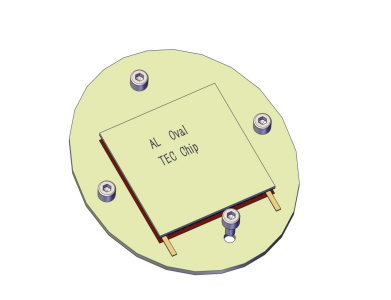
A TEC chip is the commercial product implementation of this principle—a solid-state heat pump manufactured as a modular assembly. Industry nomenclature varies by region and sector: European technical specifications often reference “Peltier modules,” while North American datasheets predominantly use “TEC” or “thermoelectric cooler.” Japanese manufacturers frequently employ “electronic cooling elements” in JIS-standard documentation.
For procurement purposes, these terms describe identical devices: semiconductor-based heat-transfer modules that utilize the Peltier effect. When reviewing supplier quotations or technical drawings, engineers should verify performance specifications rather than rely solely on naming conventions, as manufacturers may use terminology interchangeably within the same catalog series.
The Peltier Effect: Core Working Principle
The Peltier effect functions by adjusting the energy levels of charge carriers at semiconductor junctions. When a direct current passes through a circuit with two different conductors—usually N-type and P-type bismuth telluride semiconductors—electrons take in thermal energy at one junction (cold side) and emit it at the other junction (hot side).
In N-type materials, the majority carriers (electrons) transition from low to high energy states upon entering the junction, absorbing lattice phonon energy and causing localized cooling. Conversely, P-type materials primarily rely on hole migration for charge transport. When holes move against the direction of the electric field, this process also removes thermal energy from the junction interface.
Commercial TEC chips consist of several P-N pairs connected electrically in series and thermally in parallel. This setup enhances cooling ability while keeping voltage needs within a practical range—usually 12-16V DC for typical modules. The rate of heat absorption increases proportionally with the current supplied up to the maximum rated current (Imax), after which Joule heating caused by electrical resistance offsets the benefits of thermoelectric cooling.
The Peltier effect operates in both directions because of its reversible nature: reversing the current direction reverses the heat flow, enabling a single device to provide both heating and cooling in temperature control systems.
Key Specifications and Performance Parameters
Critical Technical Ratings
Procurement engineers must evaluate five primary performance metrics when specifying TEC chips for industrial applications:
- Qmax (Maximum Cooling Capacity)
Expressed in watts, Qmax represents the heat pumping capacity at ΔT = 0°C (when both module faces maintain equal temperature). This rating defines the theoretical maximum heat transfer before accounting for temperature differential losses. A module rated at Qmax = 50W can absorb 50 watts from the cold side under isothermal conditions, though real-world performance decreases as ΔT increases.
- ΔTmax (Maximum Temperature Differential)
The largest achievable temperature difference between hot and cold surfaces under zero heat load conditions. Standard single-stage TEC chips deliver ΔTmax values of 65-75°C, while multi-stage cascaded modules reach 100-130°C. This parameter directly impacts application feasibility for deep-cooling requirements.
- Imax (Maximum Operating Current)
The amperage at which Qmax occurs. Operating beyond Imax generates excessive resistive heating, reducing net cooling capacity. Typical single-stage modules specify Imax between 3 and 8A, depending on element count and geometry.
- Voltage Requirements
Most industrial TEC chips operate at 12-16V DC, though specialized modules range from 3V (portable devices) to 28V (aerospace applications). Voltage tolerance typically allows ±10% variation without performance degradation.
- COP (Coefficient of Performance)
The ratio of heat pumping capacity to electrical power consumed. High-efficiency modules achieve COP values of 0.3-0.6 under optimal conditions, meaning they transfer 0.3-0.6 watts of heat per watt of electrical input. COP decreases exponentially as ΔT approaches ΔTmax.
TEC Chip Specification Comparison
| Parameter | Single-Stage 40mm | Single-Stage 62mm | Multi-Stage Cascade |
|---|---|---|---|
| Qmax | 50-60W | 125-150W | 30-40W (cold stage) |
| ΔTmax | 67-72°C | 67-72°C | 100-130°C |
| Imax | 6.0-8.0A | 15.0-18.0A | 3.0-4.5A |
| Voltage | 15.4V | 15.4V | 24-28V |
| Element Count | 127 couples | 127 couples | 2-3 stages |
| Thermal Resistance | 0.42°C/W | 0.18°C/W | 0.65°C/W |
| Typical Applications | Laser diodes | High-power electronics | Laboratory cooling |
Material Composition and Manufacturing Standards
Modern TEC chips utilize bismuth telluride (Bi₂Te₃) alloy semiconductors doped with antimony or selenium to optimize carrier concentration. N-type elements incorporate selenium doping (Bi₂Te₂.₇Se₀.₃). P-type materials use antimony (Bi₀.₅Sb₁.₅Te₃). These specific compositions maximize the Seebeck coefficient and electrical conductivity ratio, which are critical for thermoelectric efficiency.
Ceramic substrates—usually made of 96% alumina (Al₂O₃) or aluminum nitride (AlN)—serve to provide electrical insulation and structural strength. Alumina substrates are cost-effective and have sufficient thermal conductivity (24-28 W/m·K), whereas AlN substrates offer better heat transfer (170-180 W/m·K) and are suitable for high-power-density applications that require low thermal resistance.
Manufacturing compliance focuses on RoHS (Restriction of Hazardous Substances) and REACH (Registration, Evaluation, Authorization of Chemicals) regulations. After 2006, lead-free solder interconnects replaced traditional tin-lead alloys, although some military-specification modules still use leaded solders for better mechanical reliability during thermal cycling. Procurement specifications should clearly specify compliance requirements, especially for distribution within the EU market.
Manufacturers certified under ISO 9001 apply statistical process control to ensure critical dimensions: element height consistency (±0.02mm), solder joint void content (<5%), and ceramic flatness (<0.05mm across the module area). These tolerances directly affect thermal contact resistance and operational lifespan.
Industrial Applications and Selection Criteria
Common B2B Use Cases
- Laser Diode Temperature Stabilization
Semiconductor lasers used in fiber-optic telecommunications and materials processing need a temperature stability of ±0.01°C to ensure wavelength accuracy. TEC chips that incorporate thermistor feedback enable closed-loop control, compensating for ambient temperature changes and heat generated during operation. Standard setups typically feature 30x30mm modules with a Qmax of 25-35W.
- Medical Diagnostic Equipment:
PCR thermal cyclers for DNA amplification use TEC arrays to enable rapid temperature changes (10-15°C/second ramp rates) between the denaturation (95°C) and annealing (55-65°C) stages. High-current modules (Imax > 10A) combined with forced-air heat sinks support the 25-40-cycle throughput required for clinical laboratory procedures.
- Telecommunications Infrastructure
Base station power amplifiers produce thermal loads of 50-150W within confined enclosures. TEC-based spot cooling keeps RF component junction temperatures below the maximum rating of 85°C, thereby increasing the mean time between failures (MTBF) in outdoor installations that face ambient temperature variations from -40°C to +65°C.
- Analytical Instrumentation
Gas chromatography detectors and spectrophotometer sample cells use TEC chips for cooling below ambient temperatures without mechanical compressors. Vibration-free operation maintains measurement accuracy, and their compact sizes (ranging from 15x15mm to 40x40mm) fit within limited optical pathways.
- Temperature-Controlled Enclosures
Portable vaccine refrigerators and laboratory incubators utilize TEC technology to operate on battery power. Modules designed for 12V DC automotive power supplies offer heating and cooling by reversing polarity, removing the need for dual systems.
Procurement Considerations
- Heat Sink Thermal Resistance Matching
TEC performance decreases quickly as the hot-side temperature increases. Engineers need to determine the overall thermal resistance from the junction to the environment: R_total = R_TEC + R_interface + R_heatsink + R_convection. For a module with an internal resistance of 0.4°C/W that dissipates 60W, keeping the hot-side temperature at 50°C in an ambient of 25°C requires a heat sink assembly resistance of no more than 0.02°C/W—this can only be achieved through forced-air or liquid cooling.
- Power Supply Ripple Specifications
TEC chips can handle up to 10% voltage ripple; too many AC components cause parasitic heating through resistive losses. Switch-mode power supplies must include output filter capacitors (at least 1000 µF per ampere) and exhibit less than 100 mV peak-to-peak ripple under full load.
- Lifespan Under Thermal Cycling
Solder fatigue caused by the coefficient of thermal expansion (CTE) mismatch between ceramic (6.5 ppm/°C) and copper interconnects (17 ppm/°C) limits the operational lifespan. Modules that cycle ±40°C can endure between 200,000 and 500,000 cycles before experiencing a 10% decline in performance. Applications that exceed 20 cycles per day should specify high-reliability solder formulations and apply current derating by operating at 80% of Imax.
- Cost-Performance Analysis
Cooling costs per watt vary from $0.80 to $2.50, depending on volume and specifications. Modules with high efficiency typically carry a 30-50% premium but decrease operational power consumption by 15-25%, resulting in payback periods of 18-36 months in continuous-duty applications. When calculating the total cost of ownership, it is essential to consider power supply expenses, heat sink assembly, and ease of maintenance.
FAQ Module
Q1: Can I use “TEC” and “Peltier module” interchangeably in technical documentation?
Yes, both terms describe the same device in industrial contexts. “TEC” (Thermoelectric Cooler) and “Peltier module” refer to commercial products that utilize the Peltier effect for solid-state heat pumping. Use “TEC chip” in North American procurement documents and “Peltier module” for European CE compliance paperwork to align with regional conventions, though suppliers universally recognize both designations.
Q2: What determines the maximum temperature difference a TEC chip can achieve?
ΔTmax depends on three material properties: Seebeck coefficient (voltage generated per degree temperature difference), electrical conductivity (minimizing resistive losses), and thermal conductivity (reducing parasitic heat backflow). The thermoelectric figure of merit (ZT) combines these factors—higher ZT values enable greater ΔT. Single-stage modules reach 65-75°C differentials; cascaded multi-stage designs achieve 100-130°C by stacking progressively smaller modules, though at significantly reduced cooling capacity.
Q3: How do I calculate the required heat sink size for my TEC application?
Use the thermal resistance formula: R_heatsink = (T_hot – T_ambient) / (Q_load + P_input) – R_TEC – R_interface. For example, cooling a 30W load with a TEC consuming 45W (75W total heat rejection), maintaining 50°C hot-side temperature in 25°C ambient with 0.4°C/W module resistance and 0.1°C/W thermal interface: R_heatsink = (50-25)/75 – 0.4 – 0.1 = 0.33 – 0.5 = requires forced convection, as natural convection heat sinks rarely achieve <0.5°C/W. Specify heat sinks with a safety margin: target 60-70% of calculated maximum resistance.
Conclusion
TEC chips and Peltier modules are both forms of thermoelectric cooling technology, with the only difference being the naming conventions used in different industries and regions. Procurement choices should focus on selecting components based on specifications: ensuring that Qmax, ΔTmax, and Imax ratings align with the application’s thermal loads, while also considering system-level factors such as heat sink thermal resistance, power supply features, and operational duty cycles.
The commercial value of TEC technology is based on solid-state reliability—there are no moving parts, no refrigerants, and it offers reversible heating and cooling operation. Improvements in material technology, such as bismuth telluride alloy compositions and ceramic substrate thermal conductivity, are steadily enhancing efficiency, although basic physics limit COP to below that of vapor-compression systems.
Industrial uses that require compact size, vibration-free operation, or accurate temperature regulation justify accepting a 15-25% efficiency loss compared to mechanical refrigeration.
Successful thermal management system design requires a comprehensive analysis. TEC module selection accounts for only 30-40% of the overall system performance, while heat sink design, thermal interface materials, and control loop tuning are equally essential.
Engineers should involve suppliers early in development to verify thermal models with empirical data, especially for high-reliability applications where field failures can be costly. Specification sheets offer baseline performance, but real-world integration requires careful consideration of installation torque, airflow patterns, and power sequencing to ensure operational lifespans surpass 100,000 hours.