Введение
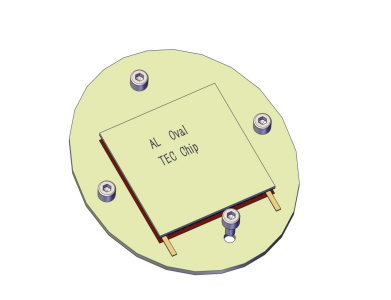
The demand for smaller and more powerful electronic devices has increased the need for effective thermal management solutions. As power densities rise, traditional cooling methods often struggle to maintain stable temperatures. A Чип TEC (thermoelectric cooling chip) provides precise temperature control by using the Peltier effect in a compact, solid-state design.
With no compressors, refrigerants, or moving parts, this technology offers reliable, silent, and efficient cooling for applications such as optical transceivers, medical devices, semiconductor equipment, and other precision electronics. This article explains how thermoelectric cooling technology works, its key advantages, and why it is becoming an important solution for modern thermal management challenges.
Understanding the TEC Chip: How Does It Work?
A thermoelectric cooler, also known as a Peltier device, is a solid-state cooling component that uses the Peltier effect to transfer heat from one side of the device to the other. When direct current passes through semiconductor materials with different electrical properties, heat is absorbed on the cold side and released on the hot side, creating a temperature difference.
The internal structure of the device typically consists of multiple pairs of p-type and n-type semiconductor elements, commonly made from materials such as bismuth telluride (Bi₂Te₃). These semiconductor couples are electrically connected in series and thermally arranged in parallel between two ceramic plates. When power is supplied, electrons carry thermal energy through the semiconductor elements, causing one surface to cool while the opposite surface generates heat.
Compared with traditional cooling technologies, the key advantage of thermoelectric cooling solutions is their solid-state design. Without compressors, refrigerants, fans, or other mechanical components, they can operate quietly with reduced maintenance requirements and improved long-term reliability. In addition, by reversing the direction of the electrical current, a thermoelectric cooler can switch between cooling and heating modes, making it a flexible solution for applications that require precise and bidirectional temperature control.
Core Advantages of TEC Chip Technology in Thermal Management
Why are more engineers adopting чипами TEC for thermal management applications? The answer lies in their ability to provide precise, reliable, and compact temperature control where traditional cooling solutions may not be suitable.
Precise Temperature Control
One of the key advantages of a TEC chip is its ability to achieve highly accurate temperature regulation. By precisely controlling the current supplied to the device, TEC systems can maintain stable temperatures for applications such as laser diode stabilization, optical communication modules, and laboratory instruments, where even small temperature variations can affect performance.
Compact and Flexible Design
With a thin and lightweight structure, TEC chips are ideal for applications with limited installation space. Unlike bulky cooling systems that require fans, pumps, or complex piping, TEC chips can be integrated directly near heat-sensitive components to provide localized thermal management.
Reliable and Silent Operation
Because TEC chips have no mechanical moving parts, they eliminate common failure points associated with traditional cooling methods. This allows them to operate quietly with minimal maintenance, making them suitable for medical equipment, precision instruments, and other applications that require long-term stability.
Environmentally Friendly Cooling Solution
TEC chips do not rely on refrigerants or produce direct emissions during operation, making them an attractive option for companies seeking more sustainable thermal management solutions. Their compact design and long service life also help improve system efficiency in various electronic applications.
Critical Applications: Where TEC Chips Are Making a Difference
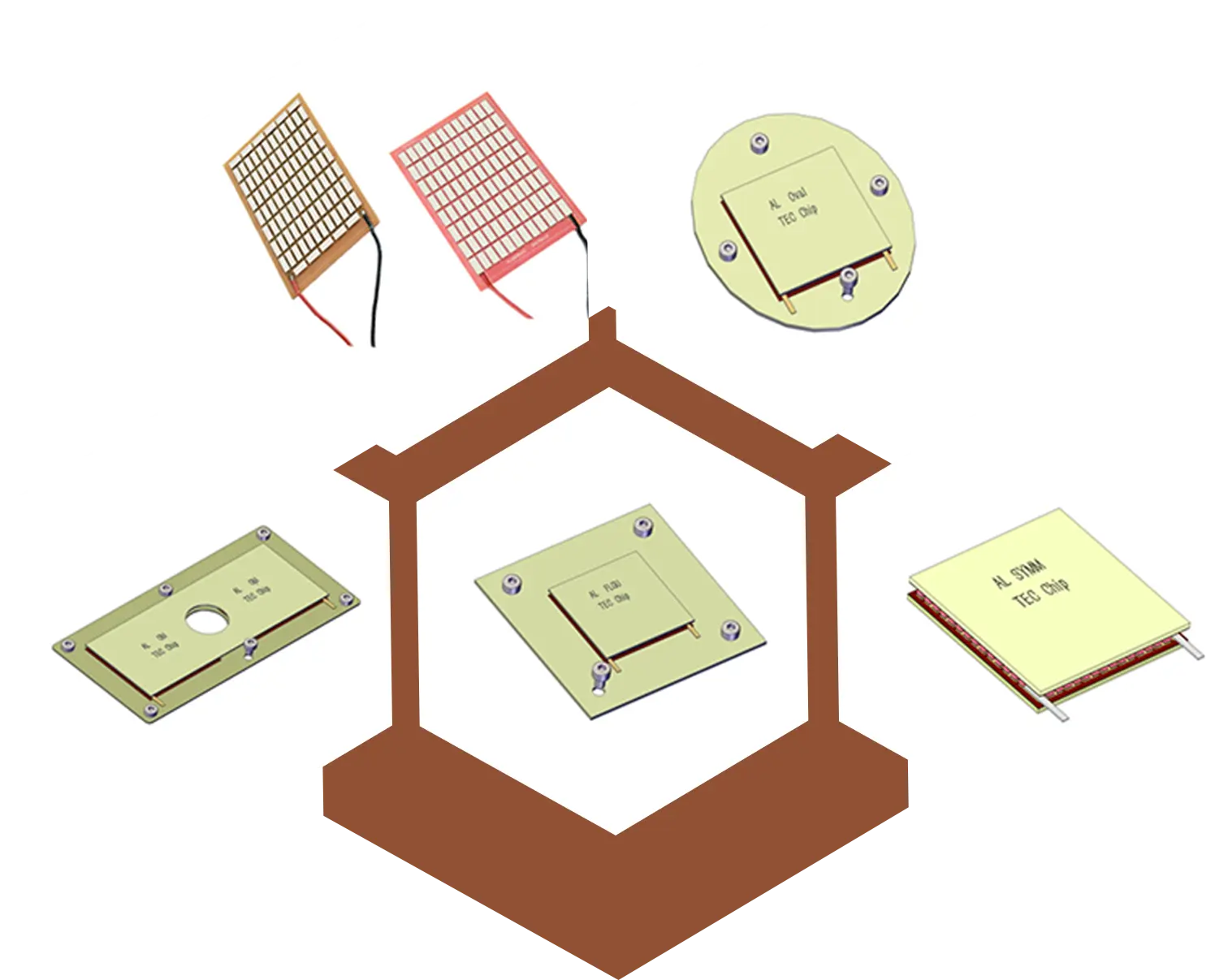
The flexibility of TEC chip technology allows it to support a wide range of industries, from telecommunications and healthcare to advanced computing and industrial electronics.
Optical Communications and 5G/6G Networks
Optical transceivers require precise temperature control to maintain stable laser performance and signal quality. TEC chips help regulate the temperature of laser diodes, preventing wavelength shifts and improving communication reliability. With the continuous expansion of high-speed networks, micro TEC solutions are increasingly used in compact optical modules such as 400G and next-generation optical communication systems.
Consumer Electronics
As electronic devices become smaller and more powerful, managing localized heat buildup has become a growing challenge. TEC chips provide targeted cooling for compact devices by controlling temperatures in specific areas, helping improve device performance and user experience.
Медицинское и лабораторное оборудование
Many medical and laboratory systems require accurate temperature control for reliable operation. TEC chips are widely used in applications such as PCR equipment, diagnostic devices, and sample storage systems due to their precision, compact size, and stable performance.
Data Centers and High-Performance Computing
Increasing server density and AI computing demands are creating new challenges for data center cooling. TEC chips can provide localized thermal control for high-performance electronic components and can be combined with other cooling technologies, such as liquid cooling and heat pipes, to improve overall system performance.
Automotive and Industrial Electronics
From electric vehicle battery management to industrial power electronics, TEC chips provide reliable temperature regulation in demanding environments. Their ability to deliver both cooling and heating makes them suitable for applications requiring flexible thermal control under changing operating conditions.
TEC Chip vs. Traditional Cooling Methods: A Detailed Comparison
To truly appreciate what a TEC chip brings to the table, it helps to see how it stacks up against conventional cooling approaches. Each method has its strengths, but the TEC chip occupies a unique niche that no other technology quite fills.
| Feature | Чип TEC | Forced Air Cooling (Fans/Heatsinks) | Liquid Cooling | Vapor Chamber/Heat Pipe |
|---|---|---|---|---|
| Cooling Mechanism | Active (Peltier effect) | Passive/Active (convection) | Active (liquid circulation) | Passive (phase change) |
| Temperature Control Precision | ±0.01°C | Limited by the ambient | Moderate | Moderate |
| Moving Parts | None | Yes (fans) | Yes (pump) | None |
| Noise | Silent | Audible | Audible | Silent |
| Form Factor | Very compact | Bulky | Complex | Moderate |
| Sub-Ambient Cooling | Yes | No | Yes (with chiller) | No |
| Reliability | High | Moderate | Moderate | High |
| Типичные применения | Lasers, sensors, precision instruments | CPUs, general electronics | High-power CPUs, GPUs | High-power density hotspots |
Source: Compiled from industry data and research publications
While forced air cooling remains the most common and cost-effective solution for many applications, it struggles with high heat flux densities and offers limited temperature control. Liquid cooling provides excellent heat removal but introduces complexity, cost, and potential leakage risks. Vapor chambers and heat pipes are effective passive solutions for spreading heat but cannot actively cool the ambient temperature.
The TEC chip, by contrast, offers active cooling with exceptional precision in a compact, silent package. Its primary limitation has historically been efficiency—coefficient of performance (COP) values for conventional TEC chips typically range from 0.5 to 1.5. However, recent advances are changing this picture. Integrated water-cooled TEC designs have achieved COP values up to 3.26, while dual-embedded thermal modules have demonstrated a 33% enhancement in COP and a 61% reduction in total thermal resistance.
Design and Material Innovations Driving TEC Chip Performance
The performance of a Чип TEC is closely related to its semiconductor materials, internal structure, and manufacturing processes. As electronic devices become smaller and require more precise thermal control, ongoing innovations in TEC design are helping improve cooling efficiency, reliability, and integration flexibility.
Advanced Thermoelectric Materials
Thermoelectric materials determine how efficiently a TEC chip converts electrical energy into temperature differences. The performance of these materials is commonly evaluated by the figure of merit (ZT), which reflects their thermoelectric efficiency.
Bismuth telluride (Bi₂Te₃) remains one of the most widely used materials in commercial TEC chips due to its reliable performance and suitability for manufacturing. Meanwhile, emerging materials such as silicon-germanium (SiGe) are creating new opportunities for integrating thermoelectric cooling with semiconductor manufacturing processes, particularly for advanced electronic and photonic applications.
Optimized Device Architecture
Beyond material selection, the internal structure of a TEC chip also affects cooling performance. Traditional TEC designs use multiple p-type and n-type semiconductor pairs arranged between ceramic substrates to create efficient heat transfer.
Newer designs, including micro TEC structures and embedded thermoelectric solutions, are enabling more compact integration with electronic components. These approaches help reduce thermal resistance and provide more direct temperature control for applications such as optical modules, sensors, and semiconductor devices.
Multi-Stage TEC Designs for Specialized Applications
For applications requiring larger temperature differences, multi-stage TEC chips provide additional cooling capability by combining multiple thermoelectric layers. These configurations are commonly used in specialized fields such as infrared detectors, scientific instruments, and other precision systems where deep cooling is required.
Practical Considerations for TEC Chip Integration
Selecting the right TEC chip is only part of the thermal management process. Proper integration is equally important to ensure stable performance, efficient heat transfer, and long-term reliability.
Thermal Interface Management
The connection between the TEC chip, the heat source, and the heat dissipation system plays a major role in overall cooling performance. Thermal interface materials (TIMs) are often used to improve contact between components, but excessive thermal resistance can reduce heat transfer efficiency.
For this reason, engineers need to carefully evaluate mounting methods, interface materials, and system design to maximize TEC chip performance.
Hot Side Heat Dissipation
A TEC chip transfers heat from the cold side to the hot side, meaning the generated heat must be effectively removed. Without proper heat dissipation, the temperature difference across the TEC chip increases, and cooling performance may decline.
Depending on the application, TEC systems may be combined with heat sinks, fans, vapor chambers, or liquid cooling solutions to maintain stable operation.
Power Control and Temperature Regulation
TEC chips require precise current control to achieve consistent temperature performance. A properly designed control system with feedback monitoring allows engineers to adjust cooling output according to real-time thermal conditions.
Operating Environment Considerations
Ambient temperature, heat load, and the required temperature difference all influence TEC chip performance. Before selecting a TEC solution, engineers should evaluate the complete operating environment to ensure the device can meet the application’s cooling requirements.
Performance Metrics and Selection Criteria
Choosing the right TEC chip for a given application requires understanding several key performance parameters. These metrics provide the basis for informed selection and system design.
Key TEC Chip Performance Parameters
| Параметр | Description | Typical Range | Impact on Application |
|---|---|---|---|
| Qmax | Maximum heat pumping capacity | 10W – 180W+ | Determines the cooling power available |
| ΔTmax | Maximum temperature difference | 60°C – 110°C | Defines an achievable temperature drop |
| COP | Coefficient of performance | 0.5 – 3.5+ | Indicates energy efficiency |
| Imax | Maximum operating current | 3A – 15A | Drives power supply requirements |
| Vmax | Maximum operating voltage | 5V – 25V+ | Drives power supply requirements |
| Dimensions | Physical size | 3mm – 50mm+ | Determines fit in available space |
Source: Compiled from industry specifications and research data
Qmax, or maximum heat pumping capacity, represents the maximum amount of heat the TEC chip can move under ideal conditions (zero temperature differential). This is the primary indicator of cooling power. For optical transceiver applications, cooling requirements typically range from 10W to 50W, while data center and industrial applications may require 100W or more.
ΔTmax, the maximum achievable temperature difference between hot and cold sides, determines how far below ambient the cold side can go. For most applications, a ΔT of 40°C to 60°C is sufficient. Multi-stage TEC chips can achieve much higher ΔT values for specialized applications.
Коэффициент полезного действия (COP) is the ratio of cooling power to electrical power input. Higher COP means more efficient operation. While conventional TEC chips typically operate at COP values below 1.5, advanced designs are achieving COP values above 3.0. For applications where energy efficiency is critical, such as data centers, higher COP TEC chips are increasingly preferred.
The Future of TEC Chip Technology
The TEC chip market is experiencing robust growth, driven by the convergence of several powerful trends. The global Thermoelectric Cooler Modules market was valued at approximately US$967 million in 2025 and is projected to reach US$1.7 billion by 2032, representing a compound annual growth rate (CAGR) of 8.5%. Some projections suggest even faster growth, with CAGRs exceeding 10% in certain segments.
AI and High-Performance Computing are major growth drivers. As AI workloads demand ever-greater computational power, the thermal management challenges intensify. TEC chips offer a pathway to more efficient cooling for AI accelerators and high-performance processors.
5G and Emerging Networks continue to drive demand for micro-TEC chips in optical transceivers. With production capacity ramping up—one manufacturer has reported monthly production of 600,000 micro-TEC units with plans to exceed 10 million annually—the supply chain is scaling to meet growing demand.
Integration and Miniaturization are pushing the boundaries of what’s possible. Embedded TEC designs that eliminate thermal interface materials, CMOS-compatible fabrication processes, and advanced thermoelectric materials are all contributing to smaller, more efficient, and more capable TEC chips.
Sustainability is emerging as a key driver. With no refrigerants and potentially lower energy consumption than compressor-based cooling, TEC technology aligns with corporate sustainability goals and evolving regulatory requirements.
Заключение
The Чип TEC provides a reliable solution for modern thermal management challenges with its precise temperature control, compact design, and solid-state operation. Its advantages make it suitable for applications such as optical communication equipment, medical devices, semiconductor systems, and other precision electronics.
As electronic devices continue to become smaller and more powerful, advanced cooling solutions will play an increasingly important role. By selecting the right thermoelectric cooling solution based on application requirements and operating conditions, companies can achieve more stable and efficient thermal performance.
Looking for a reliable cooling solution for your next project? Contact our team to discuss your requirements and explore a customized solution tailored to your application.