Article Abstract:
The popularity of the termoelectric cooling method has increased in recent years in the electronics industry, medical devices, and temperature control systems that are compact in design and have a solid-state operation. The core of this technology is the TEC chip, which is also referred to as a thermoelectric cooler.
Ioffe’s fundamental studies, in 1957 published in Semiconductor Thermoelements and Thermoelectric Cooling, and subsequent research from the U.S. Department of Energy (DOE) and MIT’s Materials Science Reviews, TEC chips utilize the Peltier effect to directly convert electrical energy into temperature differences.
This article provides a comprehensive, industry-oriented description of układami TEC– they are explained in terms of how they function, what they are intended for, their benefits and limitations, the criteria for selection, and future growth potential.
What Is a TEC Chip?
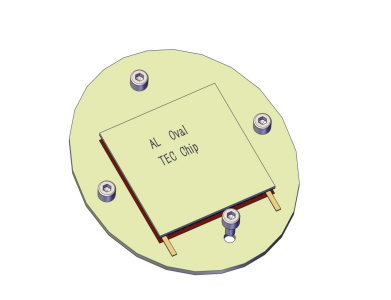
A TEC chip (thermoelectric cooler chip) is a solid-state heat pump that transfers heat from one side of the device to the other when a current of electricity traverses it. Unlike traditional cooling systems that employ compressors, refrigerants, or mechanical components, a TEC chip employs semiconductor junctions to create a temperature gradient.
In technical documentation, TEC components are also referred to as:
- Peltier components
- thermoelectric Temperature-sensing modules
- Solid-state refrigerators
Despite the different conventions of naming, the basic principle and structural design are still identical.
How Does a TEC Chip Work?
- The Peltier Effect Described
The operation of a TEC chip is derived from the Peltier effect, which was discovered by Jean Charles Athanase Peltier in 1834. When direct current flows through the meeting point of two dissimilar conductors, heat is either taken in or released at the point, depending on the current direction.
In a TEC computer:
- One side is cooler (heating)
- The other side becomes cold (cold dissipation)
- Reversing the current flow direction switches the hot and cold aspects immediately.
- The internal design of a TEC chip is
A typical TEC chip has the following components:
- Several pairs of N-type and P-type semiconductor spheres
- Electrical connections that are arranged in succession
- Temperature-supporting connections that are parallel.
- Ceramic plates (usually composed of alumina) are used for electrical insulation and mechanical support.
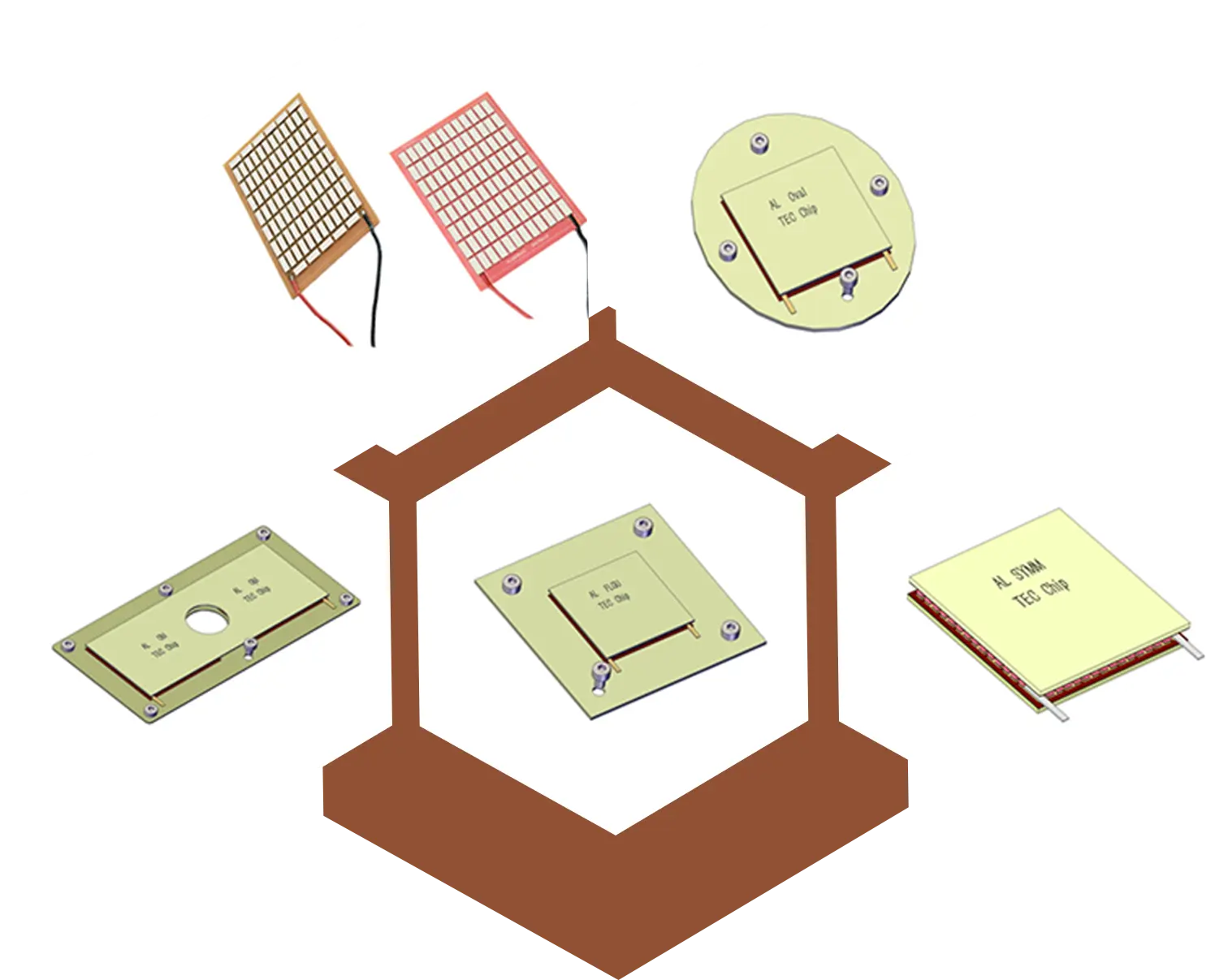
These semiconductor components are sandwiched between two ceramic substrates, which results in a compact, flat design.
- The process of heat transfer is described in detail in this section
- The TEC chip is powered by a DC voltage.
- Holes and electrons travel through semiconductor boundaries.
- Heat energy is transferred from the cold to the hot side.
- The hot side must transfer heat to a heat sink or liquid refrigerant.
- The cold side is cooler than the ambient temperature.
This direct heat pumping mechanism is responsible for precise temperature regulation, which is often accomplished with a ±0.1 degree Celsius system.
What Is a TEC Chip Used For?
TEC cards are commonly employed in many different fields that require compact, motionless, and precise cooling.
- Semiconductor and Electronics Cooling
CPU and GPU thermal management
Diody laserowe
Infrared cameras
Power amplifiers
In high-density electronics, TEC components serve as a means of cooling a region without creating mechanical noise or interference with the electromagnetic field.
- Medical and Laboratory Supplies
DNA thermal cyclers (also known as PCR machines)
Medical sensors that diagnose diseases
Portable vaccine refrigerators
Blood examiners
The lack of refrigerants in TEC chips causes them to be particularly suited for medical environments that require neatness and consistency.
- Consumer and Portable Device
Small refrigerators
Cooling drinks
Car seats that cool down
Cosmetic storage containers
TEC chips facilitate silent operation and a compact design that is intended for consumer products.
- Industrial and Optical Systems
Optical fiber temperature regulation
Precision measurement tools
Cameras that are industrialized
Aerospace electronics
In optical systems, even small temperature changes can adversely affect performance, and TEC chips are crucial to this.
Advantages of TEC Chips include their low power consumption and small size
- Solid-State Robustness
Without moving parts, TEC chips have:
- Extended service life
- Minimal care
- High resilience to mechanical stress and motion
This benefits them in the aerospace, military, and remote industries.
- Temperature Control with Precision
TEC cards can:
- Maintain consistent temperatures.
- Change the load quickly when faced with a new load.
- Support closed-loop control systems that are dependent on PID.
This type of system is difficult to make precise at smaller scales.
- Small and portable design
TEC chips:
- Minimize the space taken up.
- Can be organized or placed in a stack or array.
- Easy to accommodate in custom combinations
Designers have the option of reducing the capacity for cooling the system by altering the number of modules instead of the system’s architecture.
- Environmentally Friendly Method
- No coolants
- No escape for the greenhouse gases.
- Low levels of acoustic pollution
This concords with global sustainability and legal trends.
Limitations and Challenges of TEC Chips
Despite their benefits, TEC chips are not intended to be universal.
- Lower Energy Efficiency
Compared to traditional refrigeration, vapor-compression involves:
TEC devices have a lower degree of performance.
Efficiency decreases with increasing temperature difference.
This diminishes their effectiveness in large-scale cooling systems.
- Heat dissipation requirements
A TEC chip doesn’t eliminate heat; it instead moves it.
Ineffective heat sinking on the hot side can include:
Reduce the capacity for cooling
Cause the thermal gradient is too large
Limit the length of the module’s life cycle
- The expense of cooling the Earth is calculated in US$ per watt
Mechanically complex, but simple to understand, TEC chips are:
Require high-performance semiconductor components
Often more expensive per watt than traditional refrigeration
They are most effective for use in precision or compact setups, rather than large installations that require cooling.
TEC Chip vs Traditional Cooling Technologies
| Parametr | Chip TEC | Compressor-Based Cooling |
| Moving Parts | None | Yes |
| Noise Level | Near zero | Moderate to high |
| Temperature Precision | Very high | Moderate |
| Size | Compact | Bulky |
| Energy Efficiency | Lower | Higher |
| Maintenance | Minimal | Regular |
This comparison highlights why TEC chips dominate niche, high-precision markets rather than replacing conventional refrigeration entirely.
How to Select the Right TEC Chip?
- Key Technical Specifications
When choosing a TEC chip, consider:
- The maximum capacity for cooling (Qmax)
- The maximum temperature difference (ΔTmax)
- Operating voltage and current
- Physical characteristics
- Heat resistance
- Particular Considerations for Use
- Temperature conditions around the ambient
- Precise cooling degree
- The power supply’s capacity
- The design of the heat sink is considered feasible
Selection errors are often caused by an underestimation of the required heat dissipation capacity on the hot side.
Future Trends in TEC Chip Technology
Future planned investigations will concern:
- Innovative materials for the thermoelectric effect
- More powerful semiconductors with a higher ZT (figure of merit).
- Cooling systems that arehybridized have both TEC and liquid components.
- AI-thermal management algorithms that are driven by data.
Institutes like MIT, the Fraunhofer Institute, and the DOE-funded laboratory continue to promote efficiency enhancements; as a result, TEC chips are increasingly popular.
TEC Chip Purchase Guide
When choosing a TEC, the capacity for cooling shouldn’t be the sole concern. The compatibility of the system, the operating conditions, and the required reliability must be taken into account comprehensively.
- Describe the necessary conditions for application
Before purchasing, the following critical parameters must be understood:
- Cooling or heating demand (ΔT): The maximum temperature difference that can be tolerated.
- Heat load (Q): The volume of heat to be transferred.
- Temperature ambience: This affects the actual effectiveness of cooling.
Constant or variable frequency?
Different applications (lasers, medical devices, electronic cooling, optical communication) have different demands for stability and lifespan.
- Selecting the Key Technical Parameter
The maximum capacity for cooling (Qmax)
The maximum temperature difference (ΔTmax)
Voltage and current ratings
Power consumption and COP (Coefficient of Performance)
Structural appropriateness and size.
In practice, TECs typically operate at between 60 and 80 percent of their maximum capacity. Attempting to achieve extremely high lifespans will reduce the number of attempts necessary.
- Mechanical and thermal management in correspondence
Is the heat sink or cooling system for liquids sufficient?
Is the interaction between hot and cold surfaces uniform?
Is a specific size or multiple-layered TEC structure necessary?
The TEC chip is not considered an independent system; the thermal design has a significant effect on the final performance.
- Assessing the quality and dependability
Life cycle testing of thermal cycles
Maintain the joint’s strength and internal consistency of the material.
Has it been approved by the relevant industry organizations (such as the RoHS)?
For long-term operation or critical devices, it’s recommended to choose manufacturers that are mature and have a consistent supply of batches.
TEC Chip Maintenance Guide
Despite TEC’s solid-state nature and lack of moving parts, misuse can still significantly diminish its lifespan.
- Maintenance of the thermal system
Constantly surveil the heatsink, fan, or cooling system in liquid form.
Clean the dust and dirt in order to prevent a decrease in heat dissipation capacity.
Ensure the temperature difference between hot and cold surfaces is not excessively close to its boundary for a long time period.
Overheating is one of the most common causes of TEFAIL.
- Electrical Use Rules
Avoid operating at a higher voltage or current than necessary.
It’s suggested to utilize a consistent current or temperature-controlled power source.
Avoid frequent, large-amplitude power shifts.
Constant power supply control can greatly enhance the thermal cycle life.
- Mechanical and Installation Verification
Constantly assess the uniformity of installation pressure.
Avoid the thermal shock (fast temperature increase/ decrease).
Ensure that the interface materials (thermal grease, thermal pads) are not elderly.
Uneven stress can lead to fatigue of the solder joints in the TEC.
- Environmental Management
Control the condensation of the cold junction (if necessary, use a seal or dehumidifier)
Avoid environments that have a high concentration of humidity and are highly toxic to the skin.
Prevents the condensation from reaching the electrode or soldering areas.
Key Takeaway:
The lifespan and performance of a TEC chip are dependent on the design and maintenance of the system, rather than the inherent properties of the chip.
Acquisition-phase: Concerned with system efficiency and consistency
The usage phase: Temperature control, current, and cycling between temperatures.
Maintenance Phase: the focus is on the dissipation of heat, the electrical systems, and environmental conditions.
FAQ: TEC Chip Common Questions
What is the purpose of a TEC chip?
A TEC chip has the ability to transfer heat from one surface to another via electrical energy, which enables the cooling or heating of parts without moving them.
How effective is a TEC chip?
TEC devices are less energy-efficient than mechanical systems, but they are superior in precision, compactness, and reliability.
Can a TEC chip be utilized to heat?
Yes. Reversing the current flow allows a TEC chip to function as a heater.
How long does a TEC chip have?
With proper temperature management, TEC chips can operate for hundreds of thousands of hours.
Are TEC components environmentally friendly?
Yes. They don’t have refrigerants and don’t release direct emissions, which makes them environmentally more beneficial for many applications.
Konkluzja
The TEC chip is a fully functional, yet still-developing, solid-state cooling system. While it cannot be replaced by traditional refrigeration in large installations, it is exceptional in areas where Precision, Reliability, Compaction, and Silence are important. For companies that specialize in medical diagnostics or optical communications, TEC chips still serve as an essential tool for thermal management.
As the field of material science increases and the system-level integration improves, TEC chips are expected to have a larger role in the next generation of electronics and sustainable solutions to cooling.