Article Abstract:
The term TECチップ is typically applied to electronics, thermal management, medical devices, optical systems, and industrial temperature control.
According to the foundational research on thermoelectricity, like theCRC Handbook of Thermoelectrics (Rowe, D.M.), Thermoelectric Materials and Devices (Goldsmid), and IEEE articles on solid state cooling, TEC stands for Thermoelectric Cooler, a device based on the Peltier effect that is motionless and precisely heats or cools.
This article provides a comprehensive, industry-oriented description of what the TEC Chip represents, the way it’s used in professional contexts, the reason for its misconception, and how TEC chips differ from other cooling technologies.
Referenced literature:
- Rowe, D.M. – CRC Handbook of Thermoelectrics
- Goldsmid, H.J. – Introduction to Thermoelectricity
- IEEE Transactions on Components and Packaging Technologies
- ASM Handbook, Volume 18 – Electronic Packaging and Thermal Management
Introduction: Why “TEC Chip” Is More Than Just an Acronym?
In technical written documentation, suppliers’ catalogs, and engineering conversations, the term TEC Chip is typically used deceptively. Many websites address the question “What’s TEC?” with a concise statement and then move on.
However, in the real world, TEC Chip has a much more extensive definition that includes fields of physics, materials science, system design, and practical applications.
Understanding the TEC Chip’s significance is not solely a matter of terminology: it directly affects the selection of components, the expected performance of the components, the reliability of the components, and the cost of the components in different industries. These include consumer electronics, aerospace instrumentation, and medical technology.
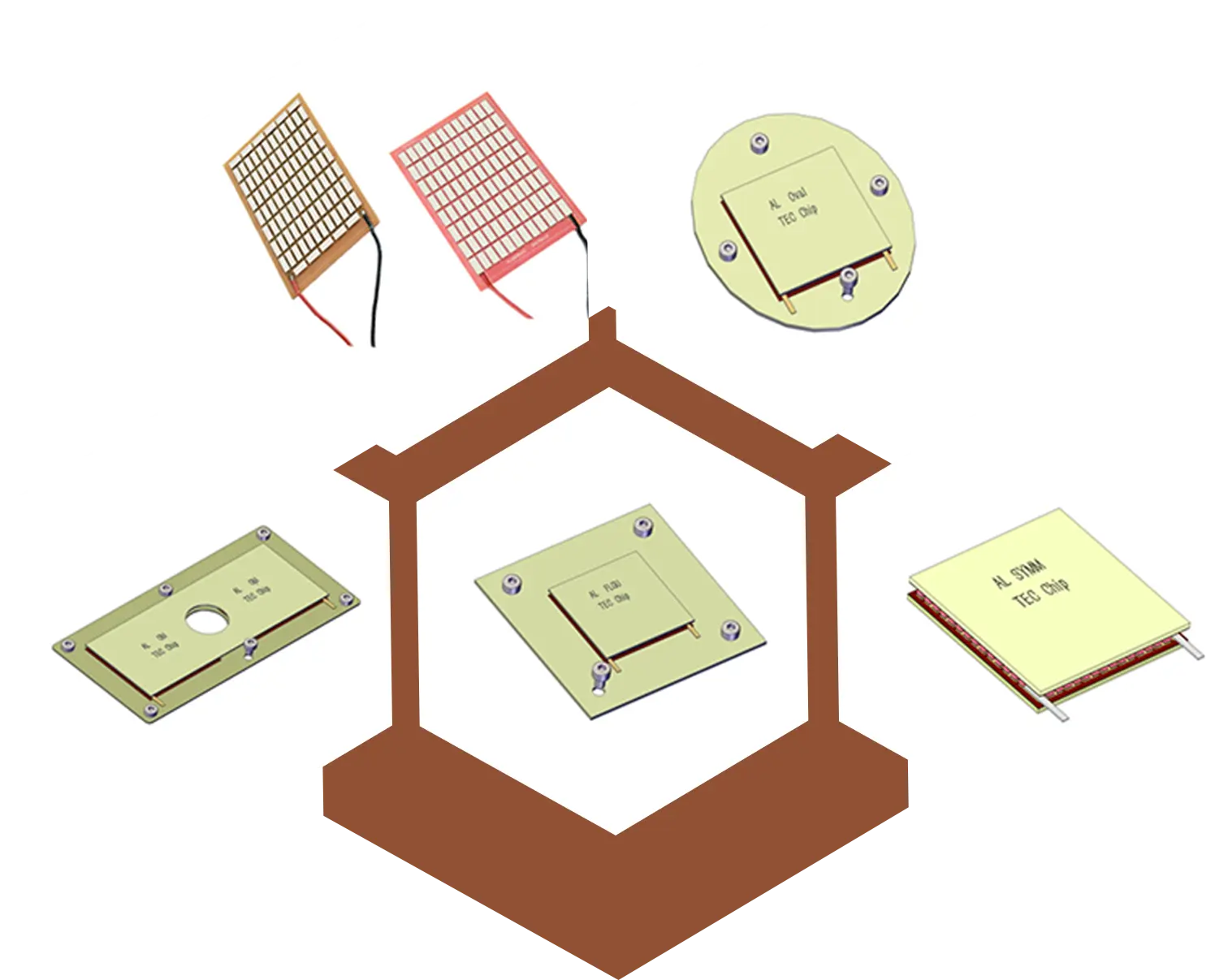
What Does TEC Stand For? The Formal Definition
- The literal translation of TEC
TEC is dedicated to the Thermoelectric cooler.
In engineering terms, a Thermoelectric cooler is a solid-state device that employs the Peltier effect to create a temperature difference when an electric current flows through a junction of two different semiconductor materials.
When combined as a compact module and utilized as a standalone component, it is typically referred to as a TEC Chip.
- The Reason For Its Name
Even though a TEC device is larger than a simple integrated circuit, the word “chip” is still commonly used because of its association with the term “integrated”.
It’s small and flat in design.
It’s similar to an electronic component.
It’s part of a system of electronic and optical components.
It’s manufactured in standardized format modules.
As a result, TEC Chip has become a common term in the industry instead of being considered a strict semiconductor type.
Historical Origin of the TEC Concept
The basis of the TEC Chip is the thermoelectric effect that was observed in the 19th century.
Seebeck Effect (1821): The voltage produced by a temperature difference is called the Seebeck Effect.
Peltier Effect (1834): The heat that is absorbed or released is dependent on the current that is flowed.
Thomson Effect (1851): The generation of heat along a conductor with a temperature gradient.
Modern TEC chips are examples of the Peltier effect that is engineered with modern semiconductor materials.
How has the Meaning of the TEC Chip Evolved in the industry?
Initially, the word “TEC” was used only in scientific literature to describe devices that used athermal conduction to cool. Eventually, its significance was enhanced in commercial settings:
- Components’ catalogs
- OEM system specifications
- Consumer product requirements
- Electronic commerce across borders
Today, TEC Chip is often used not only to cool things down, but also to control the direction of temperature regulation, including heating, holding, and thermal isolation.
Core Working Principle Behind a TEC Chip
A TEC chip functions by directing current through pairs of p- and n-type semiconductors that are connected to each other by electricity and that are also thermally connected in series.
As recent history:
- One side is hot (cold side)
- The other side releases heat (cold side)
By countering the current flow direction, the heating and cooling aspects take on different roles.
This reversibility is the most important attribute of a TEC chip, as professionals commonly use the term.
Materials That Define a TEC Chip
Many TEC components are composed of bismuth telluride (Bi₂Te₃) alloys, which are designed to operate at a variety of temperatures near room temperature.
The primary properties of interest include:
- High Seebeck’s coefficient
- Low thermal conductivity
- Effective electrical conductivity
These properties attribute to the TEC chips a role in precision environments rather than large refrigeration.
Why TEC Chips Are Classified as Solid-State Devices?
When engineers say TEC Chip, they emphasize that it is:
- Solid-state
- No moving parts
- No refrigerants or compressors
- Low vibration and noise
This distinguishes TEC chips from mechanical cooling systems and explains their popularity in sensitive applications.
Common Misinterpretations of “TEC Chip”
Despite the common usage of the term, it’s often misinterpreted.
- TEC isn’t a computer chip or process.
A TEC chip is not considered a processor or logic chip, despite its resemblance to one of these.
- TEC is not limited to a single cooling method.
A TEC chip’s temperature can increase or decrease depending on the current direction.
- TEC isn’t always energy efficient.
Compared to the vapor-compression method of cooling, TEC chips have a lower degree of efficiency but a higher degree of precision.
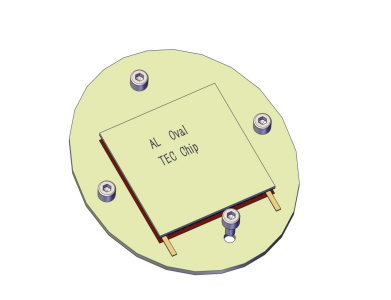
TEC Chip vs Traditional Cooling: Conceptual Difference
A TEC chip actively pumps heat, while traditional heat sinks only dissipate heat passively.
This difference explains why TEC chips are used where temperature control matters more than efficiency.
Key Parameters Implied When People Say “TEC Chip”
When a supplier or engineer mentions a TEC chip, they usually imply several specifications:
- Maximum temperature differential (ΔTmax)
- Maximum cooling capacity (Qmax)
- Operating voltage and current
- Physical dimensions
- Thermal resistance
Comparison Table: TEC Chip vs Conventional Cooling Methods
Table 1: Conceptual Comparison
| Aspect | TECチップ | Heat Sink | Compressor Cooling |
| Moving parts | None | None | Yes |
| Heating capability | Yes | No | No |
| Precision control | Very high | Low | Medium |
| Size | Compact | Medium | Large |
| Noise | Silent | Silent | Noisy |
Application Contexts That Define the Meaning of TEC Chip
The actual meaning of a TEC chip is more apparent when considered through its uses.
- Semiconductor and Electronics Cooling
TEC cards are employed to maintain temperatures of:
- レーザーダイオード
- Precise sensors
- RF components
Temperature stability has a direct impact on the quality of the signal and the lifespan of the battery.
- Medical and Laboratory Supplies
In medical technology, a TEC chip is typically used to describe:
- Sterile procedure
- Exact temperature regulation
- Completely integrated
Use cases include PCR instruments, diagnostic testers, and portable medical refrigerators.
- Optical and Photonic Systems
Lasers and photodiodes often utilize TEC components to maintain the stability of the wavelength; this is a critical component of performance.
- Industrial Automation and Instrumentation
TEC cards are employed by:
- Gas analysers
- Infrared cameras
- Calibration devices
Here, the importance of reliability and repeatability is greater than the efficiency of energy.
- Consumer Products and Device Lifestyle
TEC components are manifested in:
- Small refrigerators
- Cooling wine
- Portable food heaters
In this context, the term focuses on the convenience and compactness it provides.
- Automotive and Aerospace Abilities
In advanced cars and planes, TEC components have the support:
- Temperature control of sensors
- Temperature management of the battery (specifically)
- Air conditioning for aviation
How do engineers interpret “TEC Chip” differently from consumers?
For engineers, a TEC chip represents:
- Thermal load limits
- Control system integration
- Reliability under cycling
For consumers, it often simply means “quiet cooling.”
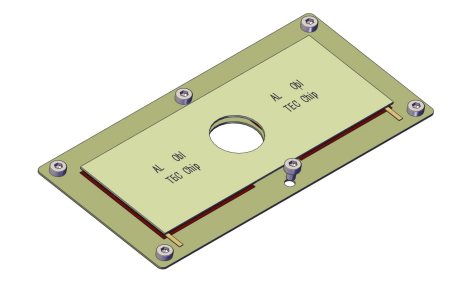
TEC Chip as a System Component, Not a Standalone Solution
A TEC chip always requires:
- Heat sinks
- Power control circuitry
- Thermal interface materials
Ignoring this leads to unrealistic performance expectations.
Table: Typical TEC Chip Classifications
Table 2: TEC Chip Categories by Use
| Category | Typical Use | Design Focus |
| Single-stage TEC | Electronics cooling | Simplicity |
| Multi-stage TEC | Ultra-low temperatures | High ΔT |
| Micro TEC | Optics & sensors | Precision |
| High-power TEC | Industrial systems | Load capacity |
TEC Chip and Thermal Management Trends
Modern trends include:
Higher efficiency materials
Thinner ceramic substrates
Improved solder reliability
These trends reinforce the relevance of TEC chips.
Limitations Implicit in the Term TEC Chip
The term also implies known limitations:
Limited cooling capacity
Heat rejection challenges
Power consumption considerations
Future Meaning of TEC Chip
As materials evolve, the term may expand to include:
Flexible TECs
Thin-film thermoelectrics
Integrated thermal ICs
FAQ: TEC Chip Explained
- What is the exact purpose of the TEC Chip?
TEC Chip is dedicated to Thermoelectric Cooling Chip, its base is the Peltier effect.
- Is a TEC chip only utilized to cool?
No. It can either heat or cool depending on the current direction.
- Is a TEC chip identical to a Peltier component?
In most instances, yes, the words are often used synonymously.
- Why are TEC components utilized despite lower productivity?
Because they provide exact, silent, and motionless temperature control.
- Are all of the TEC components manufactured with the same materials?
Many people utilize bismuth telluride, but different formulations are employed for different applications.
結論
TEC Chip is dedicated to Thermoelectric Cooling Chip, but its description is much broader than the acronym itself. In industry, it is a class of solid-state thermal control devices that are characterized by precision, reliability, and the potential for integration.
Understanding the TEC chip’s technical merits and context is crucial to making informed decisions that go beyond simple cooling.