Article Summary:
A TEC-chip, also known as a thermoelectric cooler, is a solid-state heat pump that transfers heat through the Peltier effect, enabling precise temperature control without the need for moving parts or refrigerants.
According to Rowe’s Thermoelectrics Handbook: Macro to Nano and Goldsmid’s Introduction to Thermoelectricity, TEC chips are said to operate by causing a current to pass through dissimilar semiconductor materials, which causes heat to be absorbed on one side and to be rejected on the other.
Additionally, the foundational principles of Ioffe’s classic theory of thermoelectricity explain the relationship between material properties like the Seebeck coefficient, electrical conductivity, and thermal conductivity and the efficiency of TEC.
This article provides an in-depth discussion of the entire industry, including what a TEC chip is, how it functions, and where it holds the greatest value in modern electronics, medical technology, and industrial systems.
Introduction: Why TEC chips matter in modern thermal management
As electronic devices become smaller, more powerful, and more temperature-sensing, conventional methods of cooling like fans and heat sinks are often not sufficient alone. This has prompted a renewed interest in the use of thermoelectric cooling; the TEC chip has become a significant component of precision-oriented thermal control systems that are precision-oriented.
Search queries like “What’s a TEC chip? How does TEC work?” demonstrate significant knowledge and professional desire. Engineers, product designers, procurement teams, and system integrators aren’t just seeking definitions; they need to understand the principles of operation, limitations, efficiency, and real-world applications.
What is a TEC chip?
A TEC chip is a solid-state device that serves as a heat transfer medium that transfers heat from one surface to another when electrical power is passed through it. Unlike traditional refrigeration systems, TEC devices have no compressors, fluids, or moving parts. Instead, they utilize semiconductor physics to create a temperature difference.
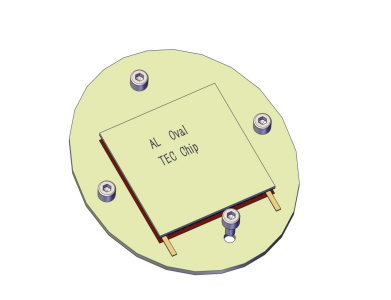
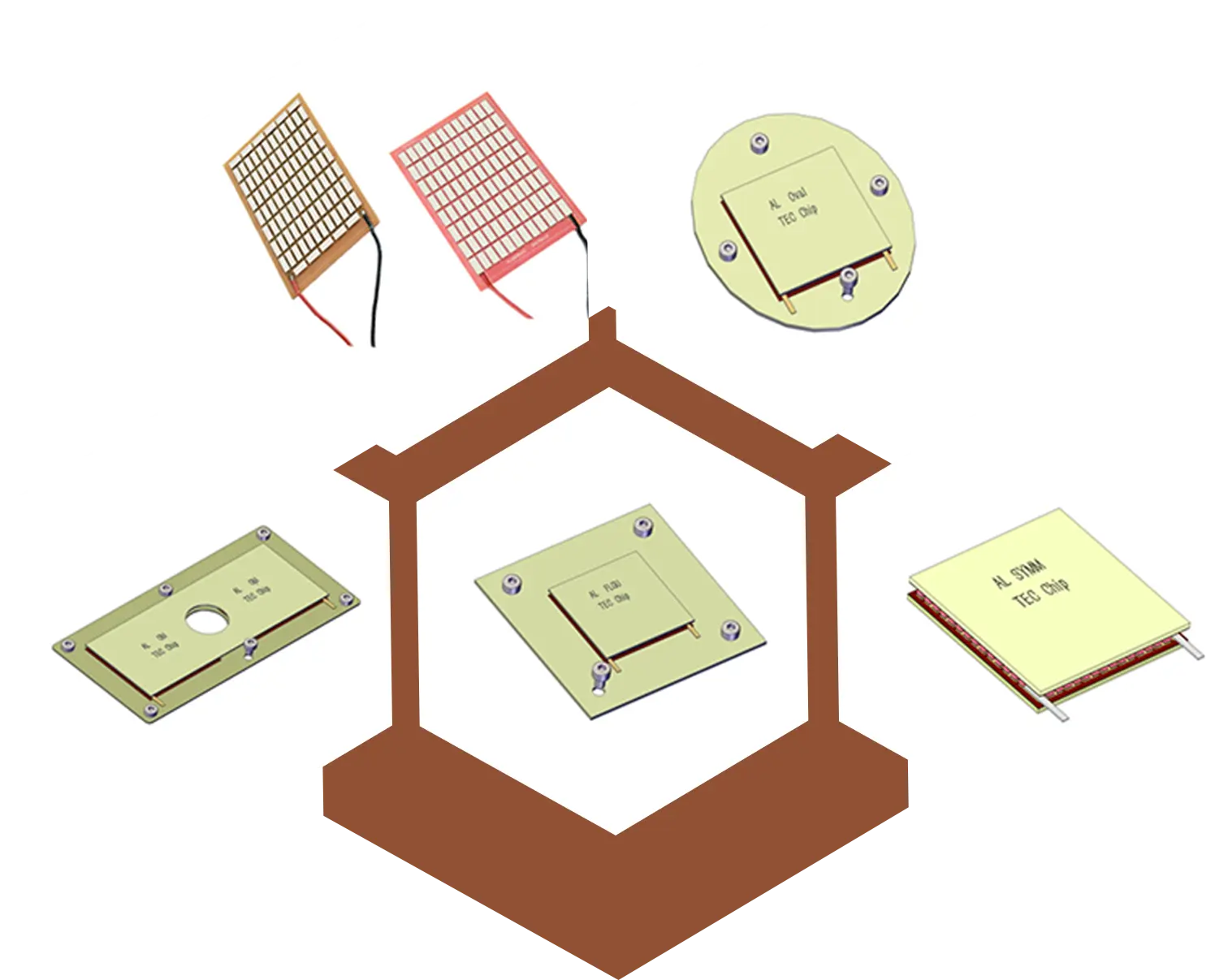
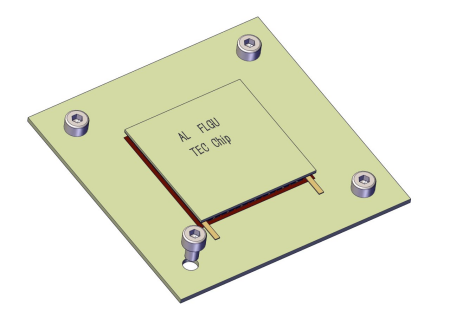
Structurally, a TEC chip is composed of multiple pairs of p- and n-type semiconductor components that are connected by electrical means and that are also thermally coupled together. These components are sandwiched between two ceramic plates, which results in a compact, flat design that is easily combined with electronic components.
This design causes TEC chips to be appreciated for their dependability, silent behavior, compact size, and precise temperature control, all of which make them ideal for applications that are sensitive or space-limited.
The fundamental principle: the Peltier effect
To understand the way a TEC chip functions, it’s crucial to understand the Peltier effect, which was first documented by Jean Charles Athanase Peltier in 1834. The Peltier effect is the description of how heat is taken in or released at the meeting point of two different conductive substances when an electric current is passed through them.
In a TEC chip, this phenomenon is exploited at the appropriate scale. When direct current passes through the p-n semiconductor junctions, electrons and holes transport thermal energy from one side of the module to the other. As such, one side becomes cold while the other becomes hot.
This phenomenon is responsible for the distinction between TEC chips and passive refrigeration. A TEC chip doesn’t just dissipate heat; it actively promotes heat away from a temperature gradient.
Step-by-step: how does a TEC chip work?
Step 1: The electrical current is employed.
When a power supply with a voltage of DC voltage is connected to a TEC chip, the electrical current flows through the series of connected semiconductor devices. The course of the current determines which side is cold and which is hot.
Step 2: Heat is transferred to the charge carriers.
As the current travels through the n-type and p-type substances, charge particles move from a lower energy state to a higher energy state at the interfaces. This motion dissipates the heat energy on the cold side and releases it on the hot side.
Step 3: The heat is taken up at the cold interface.
On the cold side of the TEC chip, the heat is transferred to the object or environment that is attached to it. This is the cooling effect that is beneficial to TEC chips in temperature-sensing systems.
Step 4: The hot junction’s heat is rejected.
The heat that is absorbed is transported to the hot side, where it must be dissipated using a heat sink or another thermal management solution.
Step 5: Constant temperature swing.
As long as the current and heat from the hot side are effectively removed, the TEC chip will continue to heat the hot side, maintaining a temperature difference.
Key performance parameters of a TEC chip
Understanding the performance of TEC chips requires knowledge of several common parameters that are typically documented in technical specifications and the most popular Google results.
Temperature difference (ΔT)
ΔT is the maximum temperature difference that a TEC chip can maintain between its hot and cold sides. Typical TEC chips have a ΔT of between 60ºC and 70ºC in ideal conditions.
Cooling ability (Qmin)
Qmax is the maximum amount of heat a TEC chip can transfer at the same temperature difference of zero. This parameter is of great importance in determining whether or not a TEC chip is capable of dealing with the thermal burden of a particular task.
The power input and efficiency of the system
TEC cards are typically less energy-saving than mechanical systems that use air. Their productivity coefficient (COP) is dependent on the operating conditions, material properties, and design of the system.
Table: Key characteristics of TEC chips
| Parameter | Description | Practical Impact |
| ΔT max | Maximum temperature difference | Limits achievable cooling |
| Qmax | Maximum heat pumping capacity | Determines load capability |
| Spanning | Operating voltage range | Affects power supply design |
| Current | Required drive current | Impacts system efficiency |
| COP | Coefficient of performance | Indicates energy efficiency |
Materials used in TEC chips
Many commercial TEC devices utilize bismuth telluride (Bi₂Te₃)-based semiconductor compounds because they have an optimal ratio of Seebeck coefficient, conductivity, and thermal conductivity at room temperature.
Literature on research focuses on the importance of material optimization in improving TEC performance. While superior materials are available for high temperature or special applications, Bi₂Te₃ still plays a significant role in the commercialization of TEC chips due to the manufacturability and cost of the material.
Advantages of using a TEC chip
- Solid-State Operation (without moving parts)
TEC components have no mechanical components, fans, or fluids. This means:
High dependability and long lifespan
Minimal care
Noisy or mechanical sound
This benefits them by providing them with a high degree of precision and sensitivity.
- Temperature Control with Precision
TEC chips facilitate precise temperature control, which is often within the ±0.1°C range when combined with appropriate controllers. Temperature can be:
Managed actively
Admittedly, the changes were made quickly.
Maintained at a consistent target
- Small and portable design
Thermoelectric components are:
Small in scope
Lightweight
Easy to adapt to small spaces.
They’re ideal for small, portable electronic devices.
- Bidirectional Heating and Cooling
By simply switching the polarity of the electrical field, a TEC chip can do this:
From cooling to heating, all of it in just a few seconds.
Remove the necessity of separate heating components.
This dual functionality increases the design’s flexibility.
- Fast thermal response
TEC chips have a quick response to power changes, which allows:
Rapid temperature increase or decrease
Real-time temperature control in complex environments.
- Environmentally friendly
No artificial coolants or greenhouse gases.
Adhering to environmental regulations
Safe for medical and laboratory use.
- Orientation- Independent Action
TEC chips can operate in any orientation, unlike systems based on gravity or fluid flow that are used to compress food. This facilitates the use of:
Portable devices
Aerospace and military components
- Clean and free of contamination, cooling
Because TEC components are sealed and have a solid state.
No oil or other byproducts of combustion
Perfect for use in hospitals, schools, and companies that have a semiconductor industry.
- Modular and Scalable Design
Several different TEC chips can be used:
Stacked or arranged in arrays
Customized to match specific cooling requirements.
This causes them to be versatile regarding power and size.
Common applications of TEC chips
Optoelectronics and electronics
TEC chips are commonly employed to regulate the temperatures of laser diodes, CCD cameras, and other precision instruments. Even small temperature changes can adversely affect the performance of these instruments.
Medical and laboratory supplies
In medical diagnostics and laboratory instruments, TEC chips can precisely regulate the temperature without noise or vibrations, as supported by sensitive measurements.
Business and industrial systems
TEC chips are common in portable refrigerators, climate-controlled containers, and special applications that require compact, maintenance-free cooling.
TEC chip system integration considerations
- Temperature Load Analysis
Before choosing a TEC chip, be sure to accurately describe:
Heat that is desired to be absorbed (Qc).
The heat produced by the TEC is itself.
Operating at an ambient
Undersizing leads to insufficient cooling, and oversizing causes power consumption and thermal stress.
- Designing the Heat Sink and the Heat Dissipation
Effective methods of removing heat on the hot side are essential:
High-efficiency heat sinks or liquid refrigeration may be necessary
The thermal resistance must be reduced as much as possible
Inadequate heat dissipation will greatly diminish the capacity to cool down.
The system’s effectiveness is only as good as its hot side’s thermal management.
- Power Supply and Electricity Control
TEC chips have requirements:
Constant, powerful DC power that is capable of providing adequate current.
Precise regulation of the current instead of simple voltage control.
Protection from overcurrents and thermal runaways
Using a dedicated TEC controller increases the accuracy and reliability of the system.
- Temperature Control Strategy
Integration should include:
Temperature feedback that is closed (thermistors, RTDs)
PIDs or computerized adaptive control strategies
Adequate placement of the sensor close to the object being cooled.
Effective temperature control prevents the temperature from increasing or decreasing significantly.
- Mechanical Support and Pressure Regulation
Adequate mounting is crucial to achieving thermal efficiency:
Constant pressure contact across the TEC’s surface.
Clean, flat surfaces that interact with the object.
The proper choice of thermal interface materials (TIMs)
Extra force will likely break the TEC plates of ceramic.
- Condensation Management
When the temperature is below the dew point of the ambient:
Moisture condensation is a possibility
Employ sealants, insulationists, or desiccants
Think about using conformal coating technology in the electronics industry.
Condensation management is essential for long-term viability.
- Efficiency of the system optimization
To increase overall effectiveness:
Use TECs at low loads, if possible.
Minimize the temperature difference (ΔT).
Combine the TEC cooling method with natural or artificial cooling.
TECs are most effective when the required temperature difference is moderate.
- Life-Time and Reliability Considerations
The long-term performance is affected by:
Operating at the most practical level
Frequent thermal cycling
Mechanical pressure and motion
Avoid constant full-power cycling in order to extend the life of the service.
- Environmental Conditions and Operating Conditions
Consider:
Temperature range around the ambient
Hypoxic and polluted water levels
Shock and vibrations are needed
These factors have an effect on the design of the enclosure and the selection of material.
- Systematic Testing and Verification
The final integration process should include:
Temperature testing that involves heat stress
Life-cycle and stress testing
Failure mode description
Testing ensures stable operation under real-world conditions.
Frequently Asked Questions (FAQ)
Q1: What is the significance of TEC in the TEC chip?
TEC is dedicated to the Thermoelectric Cooler, a solid-state device that employs the Peltier effect to transfer heat.
Q2: Can a TEC chip simultaneously heat and cool?
Yes. By countering the flow direction, a TEC chip can transition from the heating to the cooling mode.
Q3: Does TEC technology have efficient energy consumption?
TEC cards are less successful than mechanical systems based on compressors, but they are highly accurate, dependable, and compact.
Q4: Do TEC components need to be maintained?
No. Without moving parts, TEC chips have a typically low maintenance requirement over their lifespan.
Q5: What diminishes the effectiveness of a TEC chip?
The dissipation of heat, the material’s properties, the electrical input, and the system’s integration all have an effect on performance.
Conclusion: Understanding TEC chips beyond the basics
What is a TEC chip, and how does it work? The core of a TEC chip is a solid-state heat pump that employs the Peltier effect to transfer heat with efficiency and consistency. Its operation is based on well-established principles of thermoelectricity, but its performance in the real world is primarily derived from the design of the system and the context in which it is applied.
For scientists, engineers, and companies that are driven by technology, TEC chips provide a powerful solution to problems that involve precise, compact, and maintenance-free control of the thermal environment. Understanding their benefits and drawbacks allows us to make informed decisions that maximize their performance and long-term value.