Introducción
Overheating is a silent but critical threat to electronic systems. When a processor begins to throttle, a laser drifts out of calibration, or a medical analyzer fails mid-diagnosis, the underlying cause is often insufficient thermal control. To address this challenge, engineers and procurement specialists are increasingly turning to TEC Chips—a class of solid-state thermoelectric cooling modules that deliver precise temperature regulation without the noise, vibration, or mechanical complexity of traditional cooling systems.
Thermoelectric cooling is not merely an alternative; for applications that demand high precision, reliability, and compact integration, it is often the superior solution. This guide explores how TEC Chips work, where they perform best, and how they compare with conventional cooling technologies. It also examines current market trends, key technical considerations, and frequently asked questions. By the end, you will clearly understand why TEC Chips are becoming essential across industries such as consumer electronics, automotive systems, medical devices, and telecommunications.
What Is a TEC Chip? Understanding the Basics of Thermoelectric Cooling
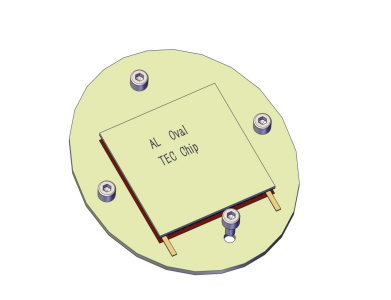
At its core, a TEC chip (Thermoelectric Cooler chip) is a solid-state heat pump that transfers heat from one side of the device to the other when an electrical current is applied. This phenomenon is known as the Peltier effect, discovered in the 19th century but only commercialized in the mid-20th century with advances in semiconductor materials.
A typical Peltier TEC cooling chip consists of multiple pairs of p-type and n-type semiconductor pellets, connected electrically in series and thermally in parallel. These pellets are sandwiched between two ceramic plates—usually made of 96% alumina (Al₂O₃)—which provide electrical insulation while allowing heat to flow through. When DC flows, one side absorbs heat (the cold side) while the opposite side releases heat (the hot side).
Unlike compressor-based refrigeration systems, a solid-state cooling TEC chip contains no moving parts, no refrigerants, and no mechanical wear. Reverse the current, and the device instantly switches from cooling to heating—a unique bidirectional capability that no traditional system offers. Modern TEC Chips are manufactured to extremely tight tolerances, ensuring consistent performance batch after batch.
Why Engineers Are Switching to TEC Chips: Key Features and Functional Advantages
Engineers evaluating thermal management solutions typically weigh reliability, precision, size, noise, and energy efficiency. Thermoelectric technology delivers where traditional methods fall short. Below are the standout features that make TEC Chips a preferred choice.
No Moving Parts, Maximum Reliability
Traditional cooling fans spin, compressors vibrate, and pumps eventually fail. A thermoelectric cooling chip for electronics has no mechanical components to wear out. SGETTEC’s modules, for instance, are tested to 1,000,000 cycles, demonstrating exceptional long-term stability. This translates to lower maintenance costs and longer product lifespans—critical for medical instruments and telecommunications infrastructure where downtime is unacceptable.
Precision Temperature Control
The cooling capacity of a mini TEC cooling module chip is directly proportional to the applied current. This linear relationship allows control circuits to maintain target temperatures within fractions of a degree. A typical TEC module can achieve a maximum temperature differential (ΔTmax) of 66°C to 73°C between its hot and cold sides under optimal conditions, making it capable of cooling well below ambient temperature. When you need ultra-fine regulation, TEC Chips outperform almost any other technology.
Compact, Lightweight, and Silent
With dimensions as small as 2mm × 2mm and heights under 1mm, TEC Chips integrate into spaces where fans or compressors simply cannot fit. The smallest Peltier TEC cooling chips weigh only a few grams, yet deliver cooling powers from milliwatts to over 50 watts per module. Operation is completely silent—no whirring fans, no humming compressors—making them ideal for noise-sensitive environments like recording studios, laboratories, and luxury vehicle cabins. For designers facing space constraints, TEC Chips offer an unmatched form factor.
Environmentally Friendly
Because TEC Chips use electrons as the “working fluid,” they eliminate the need for toxic refrigerants such as chlorofluorocarbons (CFCs) or hydrofluorocarbons (HFCs). As global regulations tighten around refrigerant emissions, thermoelectric cooling offers a compliance-ready path forward with zero greenhouse gas impact. This environmental advantage is driving more industries to adopt solid-state cooling in new product designs.
Inside the TEC Chip: Materials, Design, and Manufacturing Technology
Understanding the internal construction of a thermoelectric cooling chip helps buyers evaluate quality and performance differences between suppliers. Not all modules are created equal; material choices and assembly methods vary significantly.
Semiconductor Material Composition
The heart of every Chip TEC is its semiconductor pellets, typically made from bismuth telluride (Bi₂Te₃) alloys doped to create p-type and n-type regions. Bismuth telluride has dominated the industry for decades due to its favorable thermoelectric properties at room temperature. However, next-generation materials are emerging—including skutterudites, clathrates, and nanostructured compounds—that promise higher efficiency and better thermal stability. Leading manufacturers of TEC Chips are actively investing in these advanced materials.
Ceramic Substrates and Sealing
Most TEC Chips use high-purity alumina (Al₂O₃) ceramic plates, often 96% purity, which provide excellent electrical insulation and thermal conductivity. Some manufacturers offer aluminum nitride (AlN) substrates for higher thermal performance in demanding applications. The edges of the module are typically sealed with silicone rubber to prevent moisture ingress, protecting the semiconductor pellets from corrosion and ensuring long-term reliability. When selecting TEC Chips, always check the sealing quality for your operating environment.
Single-Stage vs. Multi-Stage Designs
-
Single-stage TEC chips contain one layer of thermoelectric couples and can achieve a ΔT of approximately 65°C to 75°C. They are suitable for most consumer and industrial applications. These are the most common modules on the market.
-
Multi-stage TEC chips stack multiple modules, cascading the cooling effect to reach much lower temperatures, down to -30°C to -50°C or even lower. These specialized TEC Chips are used in applications such as infrared detectors and laboratory instruments.
Lucintel forecasts that multi-stage TECs will witness higher growth over the forecast period, driven by demand for ultra-low-temperature precision cooling.
Real-World Applications: Where TEC Chips Are Making a Difference
The versatility of thermoelectric cooling chips has made them essential across a growing range of industries. As one market research firm notes, opportunities exist in consumer electronics, communication, medical, automobile, industry, and aerospace & defense. Below, we examine how these devices are deployed in each sector.
Consumer Electronics
The consumer electronics sector accounts for approximately 42% of the thermoelectric cooling module market. High-end smartphones use mini TEC cooling module chips to cool processors during gaming or video recording, preventing thermal throttling. AR/VR headsets integrate Peltier TEC cooling chips to keep displays and processing units within optimal temperature ranges. Ultra-thin laptops increasingly rely on solid-state cooling to achieve silent, fanless operation. Even wearable devices are beginning to incorporate tiny modules for skin temperature regulation.
Automotive and New Energy Vehicles
Thermal management in electric vehicles (EVs) is a rapidly growing frontier. The market size for in-vehicle TEC modules reached $420 million in 2025 and is projected to grow to $980 million by 2030. Applications include:
-
Battery pack temperature control: BYD’s multi-stage Peltier module solution increased driving range by 12%, driving automotive-grade product demand up 45% annually.
-
Climate-controlled seats and cup holders in luxury vehicles.
-
LiDAR thermal stabilization for autonomous driving systems.
-
Infotainment system cooling.
The automotive application category is expected to witness the highest growth in the thermoelectric cooling chip market, and these components are at the center of that expansion.
Medical and Diagnostic Equipment
Medical and biological applications will account for approximately 18% of the thermoelectric cooling module market by 2025, with a CAGR of 18.5% driven by cold chain logistics and in vitro diagnostic equipment. Typical uses include:
-
Temperature stabilization in portable blood analyzers and diagnostic instruments.
-
Cooling for laser surgical equipment.
-
Temperature control in laboratory incubators and PCR thermal cyclers.
-
Vaccine transport containers (active cooling during logistics).
TEC Chips are critical for ensuring stability and accuracy in medical device operation—a non-negotiable requirement in healthcare. Many leading medical OEMs now specify thermoelectric cooling as the standard solution for new diagnostic platforms.
Telecommunications and Data Centers
The deployment of 5G base stations has placed new demands on optical module stability. TEC Chips serve as key temperature control components in optical transceivers, ensuring stable signal transmission. In 2024, the communications industry’s demand for thermoelectric cooling modules grew 14.7% year-over-year.
Data centers, facing escalating heat loads from AI processors and high-density servers, are turning to thermoelectric cooling. By 2025, modules per data center cabinet are expected to increase from 3–5 pieces to 8–10 pieces, pushing global demand to $1.2 billion by 2028.
Aerospace and Defense
The aerospace and defense sector was among the earliest adopters of thermoelectric cooling, leveraging its vibration tolerance and reliability. Applications include cooling for infrared sensors, night-vision equipment, avionics, and satellite thermal control systems. In these mission-critical environments, solid-state cooling provides the long-term reliability that mechanical systems cannot match.
TEC Chips vs. Traditional Cooling: A Side-by-Side Comparison
When selecting a thermal management solution, understanding the trade-offs between thermoelectric and compressor-based cooling is essential. The table below summarizes the key differences. As you evaluate options, remember that thermoelectric modules excel in applications where precision, silence, and compactness are paramount.
| Feature | TEC Chip (Thermoelectric Cooling) | Compressor-Based Cooling |
|---|---|---|
| Moving Parts | None (solid-state) | Multiple (compressor, fans, valves) |
| Noise Level | Silent | 30–60 dB (audible hum) |
| Vibration | None | Significant |
| Refrigerants | None (electrons only) | HFCs, HFOs (potential leakage) |
| Precision Control | Excellent (±0.01°C achievable) | Moderate (±1–2°C typical) |
| Heating Mode | Instant (reverse current) | Not available (separate heater needed) |
| Size at <500W capacity | Compact | Bulky |
| Efficiency (COP) | 0.12–0.7 typical | 0.9–1.2 typical |
| Lifespan | 100,000+ hours (no wear) | 10–15 years (compressor wear) |
| Best For | Precision, portability, silent operation | High cooling capacity, energy efficiency |
As Laird Technologies notes, a thermoelectric assembly can be more energy efficient than a compressor-based unit throughout the application’s temperature range—by 25% to 95% in cooling and up to 400% in heating. However, compressor systems generally offer higher raw cooling capacity and better coefficient of performance (COP) for large-scale applications. For most small-to-medium thermal loads, solid-state cooling is the smarter engineering choice.
The choice is not about which technology is universally “better”—it is about which fits your specific application requirements. Increasingly, engineers are starting their designs with thermoelectric modules and only switching to compressors when necessary.
Market Outlook: The Rapidly Growing TEC Chip Industry
The global thermoelectric cooling market is experiencing robust growth, driven by miniaturization trends, energy efficiency demands, and expanding applications. TEC Chips are riding this wave of innovation.
According to multiple market research reports:
-
The global thermoelectric cooler modules market was valued at approximately $967 million in 2025 and is forecast to reach $1.7 billion by 2032, with a CAGR of 8.5%.
-
The thermoelectric coolers market (broader definition) was valued at $817.89 million in 2025, projected to grow at 10.77% CAGR to $1.67 billion by 2032.
-
The micro thermoelectric cooling chip market specifically is expected to grow at 10.8% CAGR from 2025 to 2031.
The Asia-Pacific (APAC) region is the fastest-growing market, driven by electronics manufacturing in China, Japan, and South Korea. North America benefits from strong medical technology demand, while Europe prioritizes sustainable, refrigerant-free solutions. As production scales up, the cost of these modules continues to decline, making them accessible to even more applications.
Emerging trends shaping the industry include:
-
Miniaturization and integration: Ultra-thin TEC Chips embedded directly into wearable devices and smartphones.
-
IoT integration: Smart cooling systems with real-time monitoring and automated control.
-
Advanced materials: Nanostructured thermoelectrics pushing efficiency boundaries.
-
Cost reductions: Semiconductor industry overcapacity is lowering Peltier module costs, enabling mass-market adoption of solid-state cooling in personal cooling devices.
Key Technical Specifications to Consider When Selecting TEC Chips
For procurement professionals and design engineers, the following parameters define Chip TEC performance. Always request full datasheets from your supplier when comparing different products.
| Parámetro | Symbol | Description | Typical Range |
|---|---|---|---|
| Maximum temperature differential | ΔTmax | The maximum temperature difference achievable between the hot and cold sides | 60–75°C |
| Maximum cooling capacity | Qmax | Heat pumping capacity at zero temperature differential | 5–50+ W (per module) |
| Maximum current | Imax | DC at ΔTmax | 2–15 A |
| Maximum voltage | Vmax | DC voltage at ΔTmax | 3–30 V |
| Internal resistance | AC resistance | Measured at 27°C | 0.4–10+ Ω |
| Dimensions | L×W×H | Physical footprint | 2×2×1 mm to 62×62×5 mm |
| Operating temperature range | — | Ambient conditions | -40°C to +85°C (typical) |
A representative Peltier TEC cooling chip, such as the CP40236, measures 20 × 20 × 3.6 mm, operates at 8.6 V and 4.0 A maximum, achieves ΔTmax of 66°C, and delivers Qmax of 18.7 W. When you compare components from different vendors, pay close attention to these ratings.
Preguntas frecuentes
1. What is the typical lifespan of TEC Chips?
A well-designed Chip TEC can operate for over 100,000 hours under normal conditions. SGETTEC’s modules are tested to 1,000,000 thermal cycles, demonstrating exceptional long-term reliability.
2. How efficient are TEC Chips compared to compressors?
COP of a Chip TEC typically ranges from 0.12 to 0.7, while compressors achieve 0.9–1.2. However, for small capacities (<500W) and precise control applications, thermoelectric cooling can be more efficient overall.
3. Can TEC Chips be used for both cooling and heating?
Yes. Reversing the DC instantly switches the solid-state cooling TEC chip from cooling to heating mode. This bidirectional capability is unique to these devices.
4. What is the smallest available TEC Chip size?
Mini TEC cooling module chips are available in a 2mm × 2mm footprint. These ultra-small components are used in optical communication modules, smartphone cameras, and wearable electronics.
5. Are TEC Chips environmentally friendly?
Yes. Since they use electrons as the working fluid, they require no toxic refrigerants, producing zero direct greenhouse gas emissions—a critical advantage as global refrigerant regulations tighten.
Conclusión
As electronic devices become smaller, more powerful, and more numerous, the demand for precise, reliable, and silent cooling has never been greater. TEC Chips deliver exactly that—solid-state thermoelectric cooling with no moving parts, no refrigerants, and pinpoint temperature accuracy across a staggering range of applications.
From 5G optical modules and autonomous vehicle LiDAR to portable medical diagnostics and high-end gaming phones, thermoelectric cooling chips are quietly revolutionizing how engineers manage heat. Market forecasts confirm the trajectory: double-digit growth, expanding applications, and falling costs are making these solutions more accessible than ever. Whether you need a standard off-the-shelf component or a custom-designed solution, there is a product ready to meet your thermal challenge.